
I’ve had my Z8 for nearly three months now and I’ve taken more time than usual to start posting reviews about it. The Z8 takes the place of all of my cameras so I need to test it in many different scenarios. In many ways the Z8 is just like my other cameras, but in other ways it’s completely different. This initial review will focus on the biggest differences, with future posts covering other details.
Getting It
My Z8 order has been a fun one, as I posted previously. After waiting for B&H and ordering a backup kit from Amazon, I got fed up and found a store in Kentucky that had the body-only configuration in stock. I ordered it on June 6 and it arrived on June 10, ahead of any other orders I had placed. I lost the $200 kit lens discount in the deal but but I received it in time for our yearly camping trip, so it was worth it. I’ve learned a lot about ordering a newly-released camera that I can use the next time around.
Basic Specs
I’ve never written this much about about a camera before buying it, so I’ll keep the specs short. You can read more of them here. These are the basics: 45.7 MP 20 fps RAW mirrorless with subject detection, a stacked sensor, and no mechanical shutter. Everything the Z9 has, but without the vertical grip. Now that the specs are out of the way, I can talk about how the camera actually works.
Ergonomics
A lot has been made about the Z8’s size – it’s big for a mirrorless camera. It’s bigger than the Z5/Z6/Z7 (which all have the same body), it’s bigger than the Canon R5, and it’s bigger than the Sony a7V / a9 / a1. Part of the advantage of mirrorless is smaller cameras. The Z8 isn’t small and I don’t mind. Despite packing a larger sensor, it’s only a bit larger than my D500, which is my favorite camera to hold.


The ergonomics are great. The grip is deep and well-sculpted and the buttons are in the right places. It uses the same general layout as Nikon’s other Z cameras, placing all of the controls on the right where you can access them with your thumb. I remarked positively about the ergonomics of my Z50 when I had it, even though it was a scaled down version of the Z6. The Z8 is a scaled up version and it really fits and handles well.


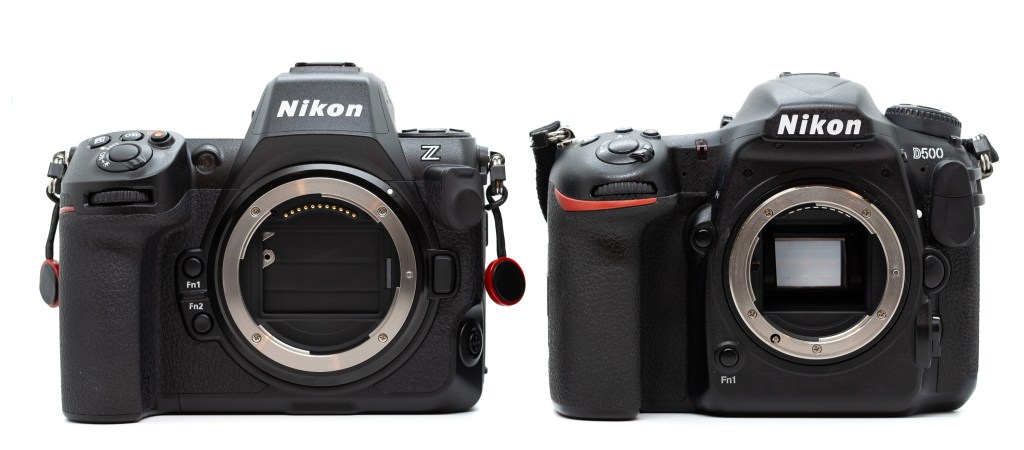


It has all of the buttons I use on my D500, though it doesn’t have a dedicated metering button like my D750. I didn’t use that very often, so I don’t think I’ll miss it. It’s also much more customizable. The record button can be programmed to change autofocus area modes, a press of the thumbstick can engage 3D tracking, and most buttons can perform a huge range of toggle or command dial selections. My Nikon DSLRs are comparatively limited, with specific assignments available for certain buttons, some being rather sparse. The Z8 provides multiple ways to setup a one-handed experience that keeps my eye in the viewfinder where it should be.


EVF
One of the biggest differences between a mirrorless camera and a DSLR is the viewfinder, so how is the EVF in the Z8? Again, much has been made about it having the same EVF as the Z9 which has the same resolution as the Z5, Z6, and Z7 cameras. It’s lower resolution than the Canon R5, Canon R3, Sony A7V, and Sony A9, but is it bad? Nope, not at all. The resolution is perfectly fine, in fact. I rented a Canon R5 last winter and while I can imagine I’d notice the difference side-by-side, it doesn’t feel like I’ve lost anything. The Z8’s EVF is very bright, crisp, and responsive.
Typically EVFs have a flicker or slideshow effect when taking continuous images which makes it more difficult to follow action than on a DSLR. The Z8 has none. None. This is even better than a DSLR. It’s kind of nuts – the only way you know you’re taking images is by the sound (if enabled) and the border flashing around the viewfinder.
To be fair, it does get “jumpy” on occasion due to dropping the display rate after a period of inactivity. This conserves power and is common across mirrorless cameras. The timeout is a tad short, but I’ve learned to press a button as I’m bringing the camera up so that it’s ready. If desired, I can trade some battery life for an extended display timeout.
I’ve used the EVF in bright light, dim light, sun, shade, indoors, outdoors. It’s bright, very stable, doesn’t skip frames, and doesn’t change resolution. It can be run at 120 hz for an even smoother view, but I generally keep it at 60 hz. It’s very comfortable over a long period of time and doesn’t bother my eyes. I get all of the benefits of an EVF including a live preview of my image and customizable information views. The live preview is just awesome and makes it much easier to get a moody image without having to adjust exposure in post.
I still use the back screen for most of my image reviewing, even though the EVF is higher resolution and provides a dark environment that makes it theoretically easier to review images. I guess that’s true, but it still feels unnatural to look at that comparatively small viewfinder when I have a screen on the back that’s larger. The EVF is higher resolution, but I don’t think Nikon’s JPEG previews resolve enough detail for it to matter. Whether looking at the back screen or the EVF, I can only truly assess accurate focus in Lightroom.
Overall it’s a great EVF. It’s far better than the EVF in my a6100, which is lower resolution, had a slideshow effect, and has significant issues operating in very dark or very light areas. I expect a better experience for a camera costing 6x as much, and that’s what I’ve got.
Initial Autofocus Impressions
I’ve got three cameras to compare my Z8 against. My D500 has one of the best autofocus systems in a DSLR, my Sony a6100 has one of the best autofocus systems in mirrorless, and my old Z50 has one of the worst. Let’s start with the easy one, the Z50.
The Z8 blows it out of the water! In my Z50 review I noted that using it for long periods was exhausting, not because of its size or controls, but because I was always fighting with the AF system. Subject tracking was awkward and barely worked, Eye AF was hit-and-miss, and AF points refreshed slowly in the viewfinder, often looking like they were off the subject when they actually weren’t. I could get quality images out of it but I couldn’t get them in a predictable way. I felt like I was just switching modes, pressing buttons, and hoping for the best.
The a6100 is a more difficult comparison, though the Z8’s ergonomics give it an advantage. While the z6100’s Eye AF and subject tracking are very good, switching between focus modes isn’t. There simply aren’t enough buttons available to make them easy to toggle through. The Z8 has an AF Area Mode button to quickly switch from one to another whereas a6100 requires multiple levels of menus. It’s too many steps and takes so long that I miss shots. It’s also difficult to switch out of a subject detection mode when I want to photograph static subjects, or landscapes. I shoot a variety of subjects and the a6100 becomes challenging in mixed-use.
I also don’t love Sony’s focus modes. There are 18 modes, separated into regular and tracking versions. They are clunky to scroll through and frustrating to use. The Z8 is far simpler but no less versatile. It has 10 regular modes and one tracking mode, all available to scroll through at the touch of a button. I can change modes quickly and easily, just like my DSLRs. Two modes have custom sized areas, which allows me to configure shapes with subject detection. I can program different buttons to different focus modes – I have one for 3D tracking and one for single point so that I can quickly track subjects or jump out of subject detection mode.
Overall I am very happy with focus performance, with the caveat that I’m still learning to use and trust subject detection. As many of my subjects are static, I often don’t want subject detection. In this area the Z8 excels, providing essentially the same options as my DSLRs. They are easy to use, fast, and accurate. I can even use them in the same way I do on my D500 to track moving subjects with the same results. I need a camera that allows me to focus on what I want to focus on without fighting me. The Z8 delivers.


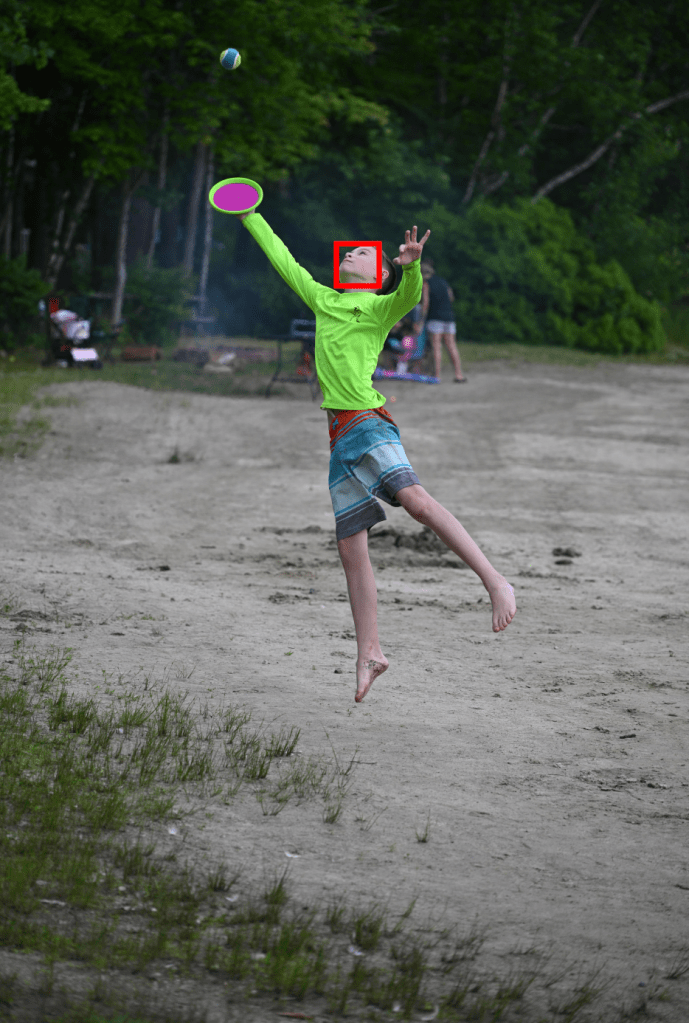
Now let’s talk about subject detection. My initial impressions are good – I can track subjects and get sharp shots of them, but as with the Canon R5, I’m not getting every shot sharp every time. Is the hit rate better than my D500? Maybe. What is noticeably better is speed: I can focus more quickly and more easily on more subjects. Where I might be moving the focus group around on the D500 trying to get it over the correct part of my subject, the Z8 is already finding the eye and I’m shooting away. I also find 3D tracking to be better, though not perfect, on the Z8. It’s still contrast-based, and still goes haywire tracking something like a soccer uniform in a group of players or a dark bird on a dark background.
Eye AF finds the eye of animals and people when they are large enough in the frame. I haven’t used it enough yet to draw conclusions but it seems to work as well as eye detect on my Sony. I’m still figuring out the best way to track animals, but the subject detection modes seem to work most of the time and is easier than using a dynamic AF mode on my D500 since it shows me exactly what it is tracking.
Those are some initial takes. I don’t get stressed out using this camera and feel confident taking photos with it. I’m still learning the subject detection modes and finding the workflow that is best for me, a process I go through for every new camera I get. I’ve had the a6100 for almost two years and I still find its subject detection to be clunky at times. After some more time with the Z8 I’m sure I’ll have more thoughts.
Initial High FPS Impressions
The Z8 can shoot RAW files at 20 fps. At twice the rate of my D500, the difference is rather noticeable. The 45.7 MP files taken at this speed are incredible and allow a lot of room for cropping when needed. It’s amazing to flip through a series of shots and see all of the detail image after image. The all-electric shutter also allows completely silent shooting, which freaks animals out less and makes people more comfortable. This is done without the banding and noise drawbacks of most cameras in electronic shutter mode (like the R5). Silent is now my preferred way to shoot.
While 20 fps is the top speed for RAW files, the Z8 can also do 30, 60, and 120 fps JPEGs with varying restrictions at each level. At 30 fps it shoots at its full 45.7 MP resolution, at 60 fps it shoots at 19 MP DX resolution with a 1.5x crop, at 120 fps it shoots without a crop but at only 11 MP. I say only 11 MP, but that’s essentially like extracting near-perfect frame-by-frame images from a slow motion video. It’s also more than 4K resolution for desktop backgrounds and large enough to print in a 10×10 photo book.


I’ve tried these higher fps JPEG only modes a bit and settled on the 60 fps DX mode most of the time. The 120 fps mode results in so many images and the extra frames in 30 fps mode aren’t worth losing RAW. 60 fps DX is right in the middle and the extra magnification is usually useful. JPEGs are far less forgiving in post so I try to take a few test shots to get the white balance and exposure correct before I fire off a bunch of shots. This mode has allowed me to get some great shots of just the right moments of dog running, water splashing, and ball playing.


As great as the images are, it’s created a couple unexpected workflow challenges. Sometimes I forget that I’m in 20 fps mode and accidentally take a ton of shots of the same thing. It wasn’t an an issue with my D500 because it was a dedicated sports / wildlife camera; those subjects always needed a high frame rate. Since the Z8 is my all-around camera I have to be conscious of the burst rate. I have high set to 20 fps and low set to 5 fps and try to remember to switch between them when needed.
When I do want to shoot at 20 fps or higher, the result is a lot of images. I had to learn to be a bit ruthless culling images from my D500; I’ll have to be even more so with the Z8, especially at 60 or 120 fps. Even the “regular” 20 fps results in 2x the deletions as I’ve trained for on my D500. Needless to say in my first few outings So far I’ve taken more than 16,000 images. After many hours of culling, I still have nearly 3400 left. I can easily cut that number by half or three quarters, but at the moment I’m keeping them around “for research”.
Image Quality
Images. Are. Sharp. As I expected, the images are incredibly sharp and provide additional room for cropping over my D800 and D750. I made a big stink about the noise levels of the R5 and well… the Z8 is about the same. It’s just the physics of a large sensor. I said I didn’t know if I’d keep a camera with that kind of noise, but guess what, I’m going to get used to it. When resized to a resolution equivalent to my other cameras (say 24 MP), the noise levels are equivalent. The images also clean up really well in DXO Pure RAW, making it far less of an issue.




From an editing perspective, the images are pretty good. Editing Z8 images is very similar to editing D500, D750, or D800 images. In some cases I feel like the shadow recovery doesn’t go as far but in other cases it does. I’ve played around with regular compressed RAW and Nikon’s two High Efficiency compressed RAW formats, so that might contribute on occasion. Overall I haven’t run into any major post-processing hurdles, especially the recovery issues I had on the Canon R5. I’ll continue to test.
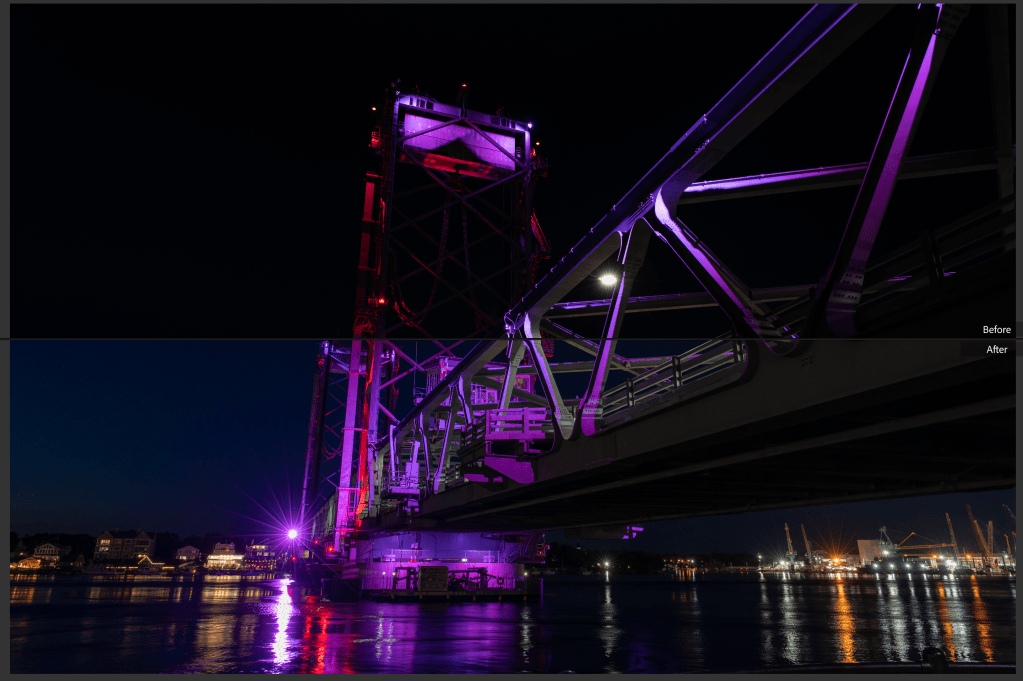
Every sensor has slightly different color rendition, even in RAW. I noticed my D800 rendering greens a bit more muted than my other cameras. My Z8 is the opposite – greens in are sometimes incredibly vibrant coming out of the camera. I usually adjust things anyway so it doesn’t make a ton of difference, but it’s interesting.
Battery
Much has been made about the Z8’s battery. No, it doesn’t last as long as the Z9 which has twice the battery capacity (duh). No, it doesn’t last as long as the Z7 or Z6 which use the same battery on older hardware with an inferior EVF setup. No, it doesn’t last as long as the Sony a1 which costs 63% more. No, none of these cameras last nearly as long as most DSLRs. Maybe Nikon should have designed a new battery for the Z8, but it didn’t, so let’s just get over that.
I didn’t find the Canon R5 to have very good battery life and the Z8 is rated for only 10 shots more per charge by CIPA standards. That equates to about 330 shots or 2.5 hours of continuous activity. I get a lot more than 330 shots in that timeframe. I take a lot of bursts and check the screen more than I should, but generally get around 1000 images per charge.
That usually lasts for a day, but I always bring a second battery. I’ve rarely used it, but it has certainly come in handy once or twice. I have a third battery if I need it as well as a bunch of less powerful batteries from my DSLRs that are still compatible. I have noticed that the battery drains while the camera is off far more than my DSLRs so I’ve made it a habit to check the battery before I bring it out.
Image Stabilization
Canon introduced lens-based image stabilization in 1995 and Nikon followed suit in 2000. Until mirrorless came along, both companies used only lens-based stabilization. Pentax and other brands started using sensor-based stabilization (aka in-body image stabilization, or IBIS) on DSLRs as early as 2006, offering a similar capability without requiring new lenses. With mirrorless, manufacturers have standardized on IBIS for mid and high-end bodies and lens stabilization on low-end bodies.


My Sony a6100 and Nikon Z50 are both low-end cameras and neither have IBIS. The Z8 is the first camera I have with it and it works well. I generally don’t have a very stable hand, but I’ve been able to take sharp images down to 1/6 second at 24mm on lenses without built-in stabilization. The extra resolution of the Z8 makes camera shake very visible, so that’s a great result. For lenses that have stabilization, the Z8 will use it in combination with its sensor stabilization.
Lenses
One of the reasons I waited for the Z8 was because I didn’t want to buy a whole new lens collection. It wouldn’t make sense to buy all new Z mount lenses for the Z8 either, so most of my glass is going to be adapted. The good news is that 90% of it works. I have some older AF-D Nikon lenses (like my beautiful 50mm f/1.4) that won’t autofocus, but almost every other lens works as well or better than it did on my DSLRs.
My Tamron lenses needed firmware updates. This worked fine for my macro because it was a legit purchase in the U.S. My 15-30mm was purchased used and was apparently gray market, that is, imported. Tamron won’t provide firmware updates for grey market lenses, but somehow it works OK enough. The image stabilizer clicks and it makes weird noises, but it still focuses and captures an image. I was considering replacing it at some point anyway with a sharper lens, so this will do for now.
I bought that Z mount 24 – 120mm lens so that I’d have a native lens for comparison and because it was sharper and had faster autofocus motors than my F mount version. So far it delivers. It’s build feels tighter and more solid than my F mount version, it focuses very quickly, and it is very sharp. It’s a bit lighter and makes for a great all-around lens. The lack of built-in stabilization is no issue either: the Z8’s IBIS performs as well or better than the F mount’s lens stabilization.

In addition it can reproduce images at a higher magnification than the F mount version – 0.39x versus 0.24x. That isn’t the 1.0x of my macro lens, but it provides more options when I don’t have my macro with me, which happens pretty often when I’m out. I’m excited for the extra versatility.
Verdict
I’m extremely happy with my purchase. The Z8 was worth the wait and it’s worth the price. I can get the high resolution I was looking for from a D850, higher frame rates than my D500, subject detection, live exposure preview, and completely silent shooting. The ergonomics are great and all of my lenses still work. I can confidently replace three cameras with just one. The Z8 exceeds my current skills and offers a lot of room to grow. I’ll be learning about and experimenting with this camera for years to come.
 Relatively Ambitious