
I’ve previously described my love for Tulips with their easy-to-photograph profiles and interesting depth from above. I found a way to photograph lilies in a pleasing way and used focus stacking to create naturally unachievable depth of field this spring. Now I’m adding sunflowers to my list.
My favorite part of flowers is seeing their petals backlit by the sun. Sunflowers, despite their name, have a very small petal surface area and thus don’t provide much backlight. They have thick centers, thick leaves, and thick stalks that take up most of their area. They also look light giant horrendous nightmare showers when they die. In short, I’ve never had much of an interest in them.
That started to change last year when we went to a sunflower festival. I got some shots in the sunflower field and started to appreciate the details. I took a few images of the petals, the texture of unbloomed flowers, and some bees that were visiting. We went to another sunflower festival this year and I decided to focus a bit more on it. I even bought a bunch to bring home.
At the Festival
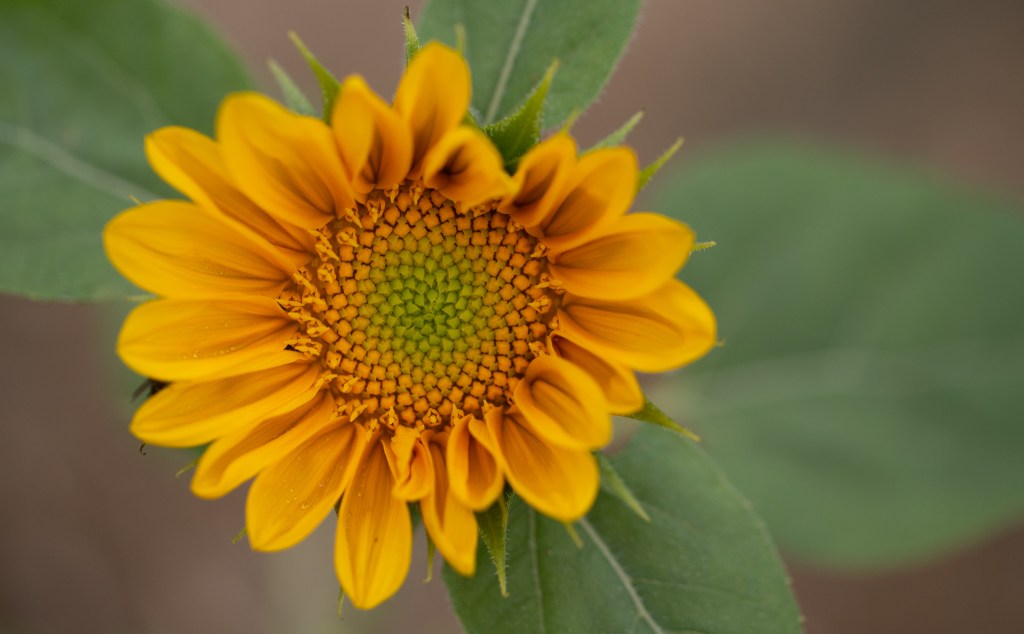


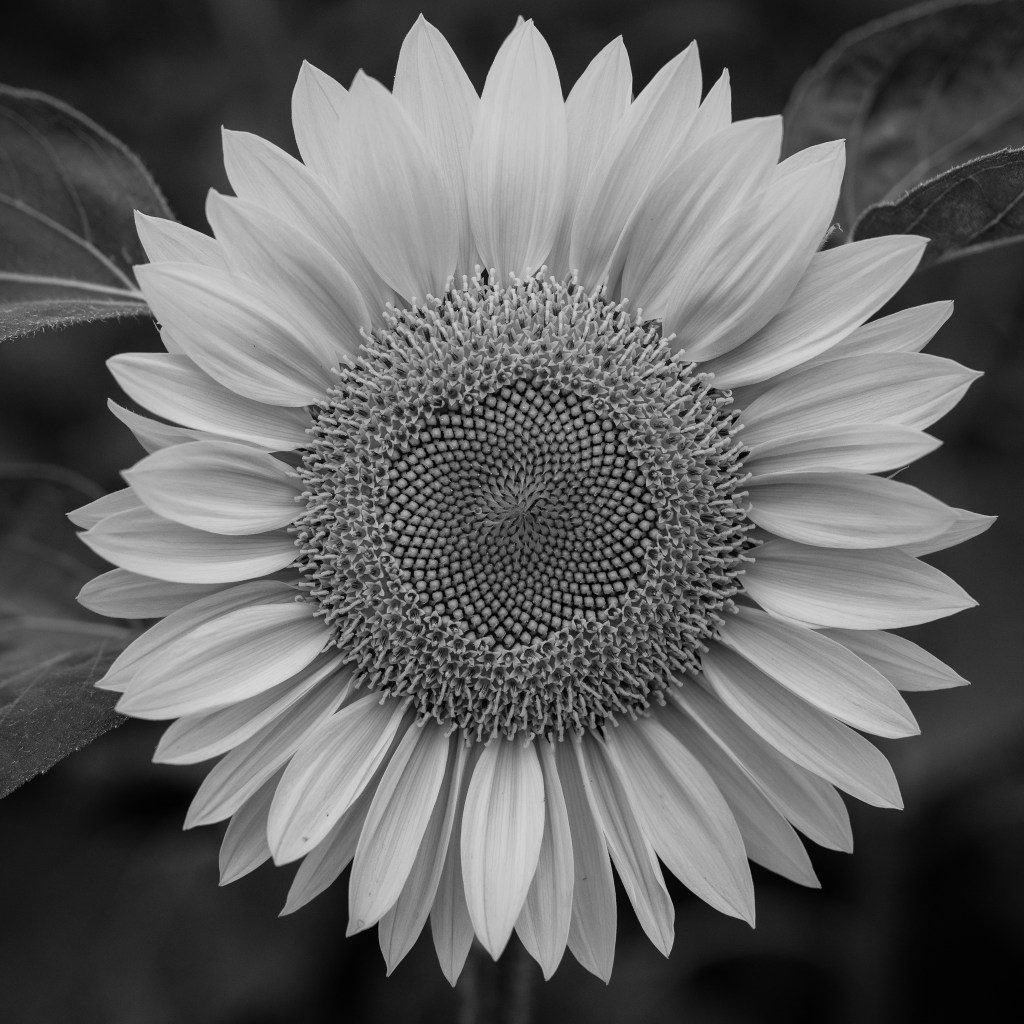


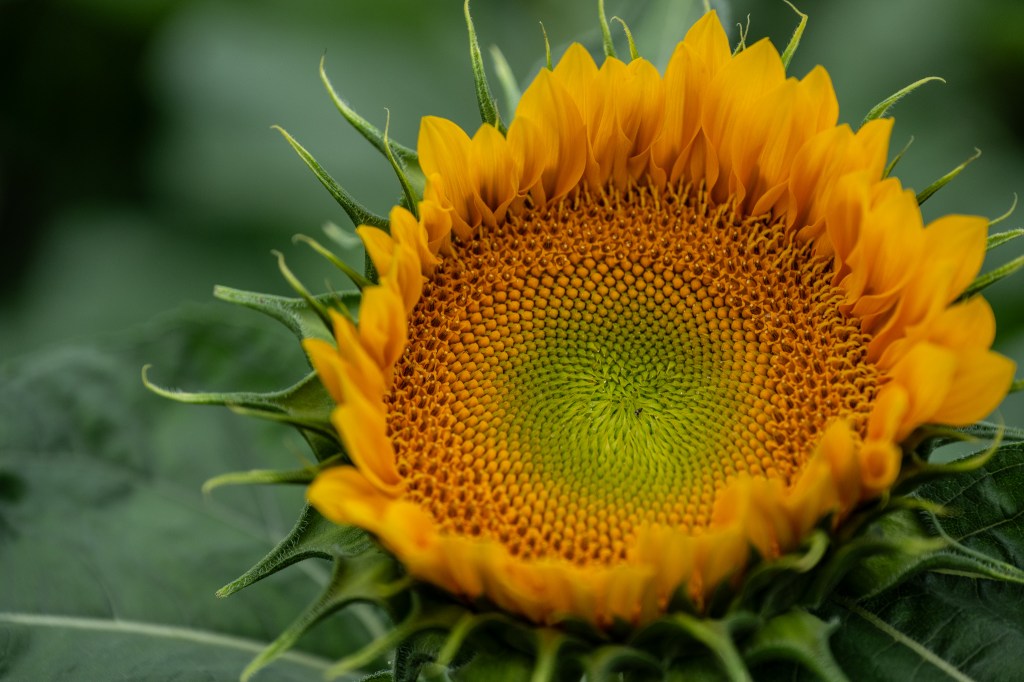
It was overcast so there was no chance of getting backlit petals, but I found many other images to take. I played with angles as well as head-on shots of the petals. I focused on the swirly pattern the buds in the center make before they open, taking lots of close ups. I hadn’t realized that they generate small droplets of sap in their centers, which made for a nice effect.
The clouds evened out the tones and made the petals look a deeper yellow. These images made me appreciate the complex folds in each petal and the way that they create shadow and texture with the light. The unbloomed sunflowers have more details than I expected, with their curled leaves and the little hairs. I was surprised at how nice these images look in black and white. They have great contrast and mood.

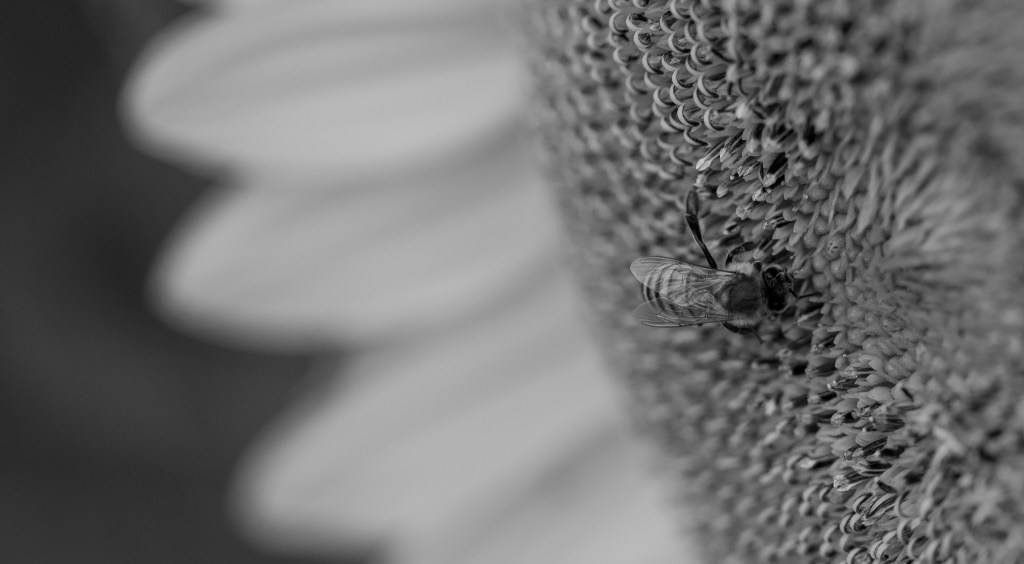


I noticed the large number of bees flying around (probably eating the sap?) and decided it was time to try to capture them. I brought my 90mm macro for detail work and it was perfect for capturing bees. I had enough working distance that I didn’t feel like I’d get stung and I got close enough to capture the texture of their eyes. Bees move very fast and erratically, so autofocus, tracking or otherwise, didn’t work so well. I used a mixture of auto and manual focus combined with bursts to get images that I could use. I typically don’t “spray and pray”, but I did in this case to increase the possibility of keepers. The result are several images that I’m proud of.
The 45 MP resolution of my Z8 really helped out here, allowing deep crops to frame up the bees nicely. The 20 fps helped as well, capturing slight differences in focus as the bees moved around, which resulted more usable images. This also validates my decision to stick with Nikon – these are all from a lens that I’ve had since 2017. It’s adapted and works perfectly.


I took most of the close-up shots with my macro, but did take a few wider shots with the Z 24 – 120mm I bought with my Z8. These lady bug photos are one example. At f/4 the lady bug is sharp but so are the disc florets (that’s what the things in the middle are called). That lens also focuses closer than my F mount version, which resulted in some the bee photos earlier.
In the Studio
After taking a bunch of shots in the moment, I bought a bouquet and brought it home. I quickly learned that the sap inside the flowers is also on the stalks – my hands were quite sticky after the car ride. Once I got them into my studio, I spent a lot of time photographing the entire bouquet. I liked the arrangement with one facing the camera and two facing the sides. I used this opportunity to try one of my new lighting gadgets – a handheld flash adapter with Bowens mount.


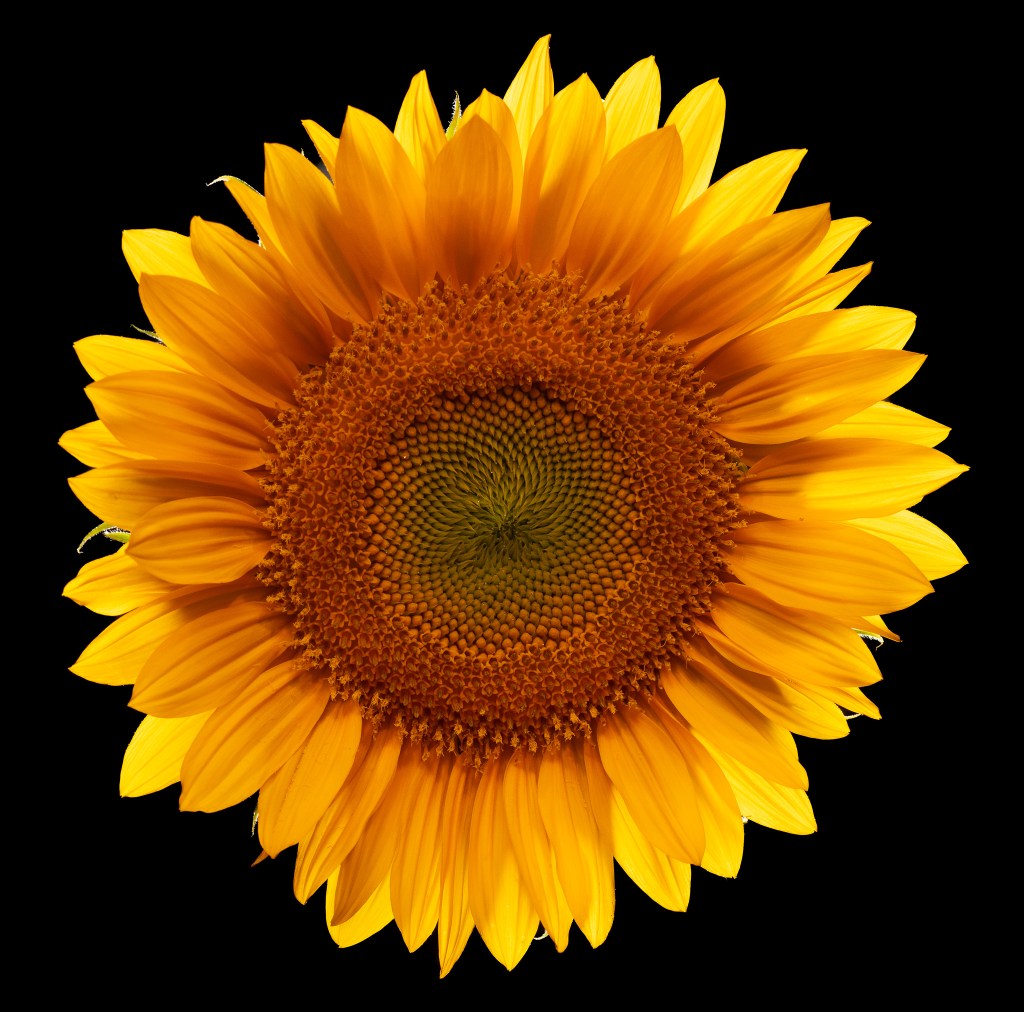


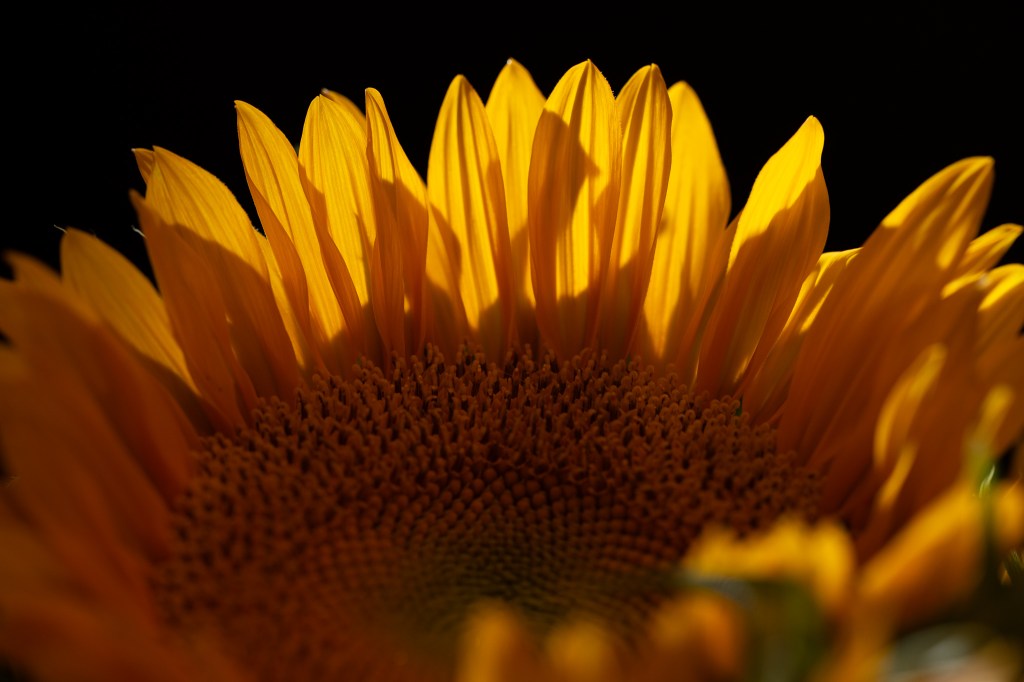

I use a similar adapter to position my flash for most of my studio images. It clamps onto the flash and attaches to a light stand. It has a Bowens-style mount on the front for attaching accessories like my soft boxes and snoot. It’s great, but I always have trouble judging the direction of the light and go through a lot of trial and error getting it right. It’s time consuming and frustrating. The handheld mount is the same thing except I can hold it. I used this to great effect for the sunflower photos – I had my remote controlled flash in one hand and my camera remote in the other: shoot, move, shoot, move, shoot, move. Much faster. Once I found an angle I liked I could set the light up on a stand and take more shots.
I eventually divorced the flowers from one another and took individual shots from different angles. I’m always trying to reproduce the natural backlighting of the sun, and this was no different. The handheld flash adapter was very helpful here. I didn’t get as many images as I intended, but I got a few that looked good once I darkened my hand out from behind. I’m happy with these studio shots. The strongly directed light made the textures show up even better than they did at the festival.
My Z8 did very well in the studio, remote controlling my flash and working perfectly with my remote trigger. I can’t overstate how much better it is using autofocus on a mirrorless camera in the studio than using Live View on a DSLR. It’s night and day in terms of responsiveness and made my job much easier. I also took advantage of the Z8’s lower ISO 64 to reduce noise and capture better dynamic range than my other cameras. It performed very well.
I’m glad I branched out to another type of flower and got some experience with insect close ups. I’ll probably hit the sunflower festival next year too, and maybe bring a sunflower home earlier in the season.
 Relatively Ambitious