
After six seasons, The Crown, Netflix’s period drama about the Royal Family, has ended. I joined The Crown right before its second season aired and have been hooked ever since. I grew up during the Charles and Diana years so I was familiar with them but I wasn’t familiar with the Queen or the rest of the family. I only knew that the Queen was the Queen and she had been old for my entire life. I’ve really enjoyed this series and each season has been appointment viewing.
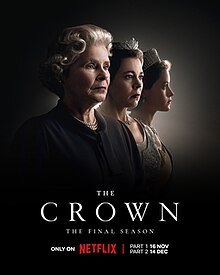
Over the course of its run The Crown has been criticized for unfairly portraying the Royal Family as cold and uncaring. It’s also been criticized for portraying it with too much compassion. It’s been accused of being anti-monarchy as well as pro-monarchy. I found it to be very balanced. By imagining the conversations that could have occurred behind closed doors, The Crown, paints the Royal Family in a much deeper way. Decisions that may seem cold and rigid on the outside become three dimensional. Behaviors that seem unforgiving and petulant seem at least somewhat motivated.
There are many examples throughout the series where the deep exploration of characters changed my mind. In the first season, the Queen’s sister Margaret wanted to marry a divorced man. The Queen didn’t allow it, which seemed very cold at the outset. But it wasn’t a simple decision. She was new to her role, being guided by establishment men who did not want to upset tradition. She was also the head of the church and had to consider the ramifications of going against its wishes. While I disagree with the decision, the show provides an understanding of it. The show explores Prince Charles in a similar way. In the media he seems “bad guy”, but the series provides another side. It provides a look at a man who was already in love with someone and was not allowed to marry them (sound familiar?). He was still petulant and immature at times, but he’s shown as a person who tried to be faithful, at least for a time. All of this is fictional and could or could not have happened, but the point is that The Crown paints these stories in multiple dimensions – I didn’t see it providing a lot of its own opinion.
Of all the seasons, the fourth is my absolute favorite for two reasons: Gillian Anderson and Margaret Thatcher. Oh and Olivia Coleman’s portrayal of Elizabeth too. Gillian Anderson and Margaret Thatcher are one and the same and she plays the part brilliantly! I really like Anderson, going all the way back to those episodes of The X Files I taped every Sunday night and moving forward to her roles on The Fall and Sex Education. Thatcher is a phenomenal character for her to play and an amazing foil for Coleman’s Elizabeth. The scenes between the two of them are dripping with tension!
I was nervous hearing that The Crown would recast every two seasons, but I think it did well, overall. The transition from seasons 1 and 2 to 3 and 4 was better than 5 and 6, however. All of the actors in the second set fit very well into their characters, especially Olivia Coleman’s Elizabeth. Picking up from Claire Foye was a big task, but Coleman played the middle-aged version of the Queen with just the right amount of mid-life confidence and concern of obsolescence. As did Tobias Menzies in a more mature Prince Philip and Helena Bonham Carter as an electric Princess Margaret. Josh O’Connor portrayed Prince Charles in a way that makes you want to root for him at points, feel sad at others, and see how immature he was in others still. Emma Corrin joined in Season 4 as a young and confused Diana trying to find her footing in the Royal Family.
The transition to season 5 was a bit rocky – Imelda Staunton is almost too stodgy as Elizabeth, Jonathan Pryce seems a bit too warm to be Prince Philip, and Dominic is too charismatic for Charles. The one year time difference from Season 4 wasn’t long enough to match the large changes in the characters. The storyline also struggled to build an engaging connection with the characters. I found some of them boring and difficult to focus on. The show avoided recreating events we had already seen in the media, instead focusing on what might have led up to those events. I understand the strategy, but it made the stories too indirect.
Luckily things recovered in season 6 and the cast really got its footing. The first four episodes were focused on Diana’s last days and her death. Things moved at a much faster pace, and while it still told the backside of known events, the stories were more interesting. It paints Diana as a woman who was trying to find herself and figure out what she wanted to do with her life. She’s a strong character who loves her kids and isn’t ready to settle down again. The episode dealing with her death shows raw emotion from the Royal family, especially Charles, while recreating the world’s reaction.
The rest of season 6 picks up following Prince William, his struggles growing up in his mother’s shadow, and his early relationship with Kate Middleton. It covers Charle’s relationship with Camilla, culminating in their marriage. It also delves into Harry a bit, sowing the seeds of disagreement between him, William, and Charles. There is less direct focus on the Queen, but her story weaves throughout the episodes. Most of the season is a reflection on her legacy and legitimacy – whether it’s public opinion about the Monarchy, insecurities about whether she should continue, or concern about whether her heirs are ready to take over. We say farewell to some of the long-running characters in the series as well, particularly Margaret, who has an entire episode devoted to her later years. It was a wonderful way to say goodbye to that character. The season ends with cameos from Foye and Coleman as the younger Queens providing perspective to Staunton as she wrestles with whether or not to abdicate the throne and give it to Charles.
I saw some criticism that The Crown doesn’t end with any particular opinion about the Monarchy. It doesn’t make a statement that it should continue or that it is obsolete. I think that’s fitting because The Crown has never been about making statements. It’s been about exploring the in-between of a very public family and living a life built on tradition. I will miss it.
 Relatively Ambitious