
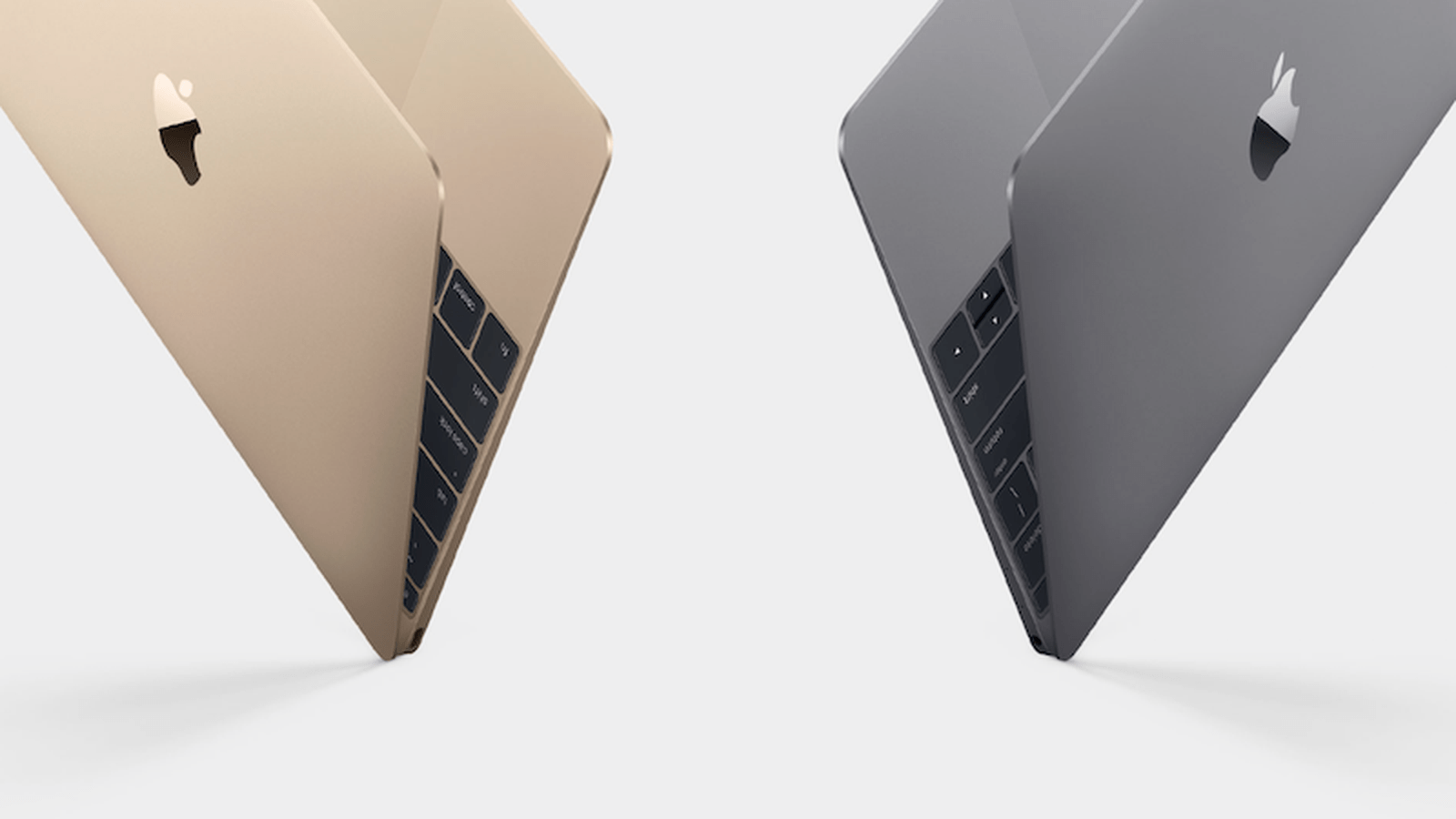
I bought an M1 MacBook Air in 2020 for $1,249. It provided a significant performance boost over my 2016 MacBook Pro, even when running applications that weren’t optimized for it. Since then. Apple has released four more generations of its M-series Apple Silicon, nearly doubling performance, but that M1 MacBook Air is still on sale. Not on Apple’s website or in Apple Stores of course, but exclusively through Walmart for $650.

Even after 5 years, the M1 is plenty powerful for web browsing, social media, and watching videos. Its performance is about on par with the iPhone 14 which was sold until early this year. Apple’s been selling the M1 Air through Walmart as an experiment and it appears to be successful, with numerous tipsters reporting on a formal successor in the works.
Apple is expected to release a machine with a smaller screen than the 13” MacBook Air, limited expansion, and a sub-$900 price point in the first half of 2026. In a first for a Mac, this rumored device will be built around an A-series chip, possibly the A18 Pro from last year’s iPhone 16. While an official name hasn’t been rumored, many refer to it as the “low-cost MacBook”.
Ruminations
What’s the Point?
The MacBook Air is Apple’s most popular Mac and starts at $999. That’s been a magic price for Apple laptops since the iBook first broke the barrier in 2002. With the exception of a couple $899 models of the 11” MacBook Air, Apple hasn’t gone below that barrier with a product it sells in its own stores. There’s still an untapped market of consumers who want something with Apple’s quality and status but can’t afford or are willing to pay $1,000 for it. A lot of people own Apple products (an iPhone on a payment plan or an entry-level iPad) but don’t own a formal computer. There are also people using Chromebooks (e.g students) who may take the opportunity to pick up something better if it is priced appropriately.
In the Intel era it was difficult for Apple to bring a down the price of a Mac while delivering reasonable performance but Apple Silicon is so powerful that this isn’t an issue. With the ability to customize the features of the chip and no middle-man to pay, Apple can better target a lower price point without compromising its brand or margins. A low-cost MacBook opens the door to new customers that might buy more hardware in the future and are likely to leverage Apple’s services, which generate recurring revenue.
Bringing the A-Series to Macs
In a first for a shipping Mac, Apple is rumored to be using an A-series chip in the low-cost MacBook. This isn’t entirely unprecedented as the developer-only Apple Silicon Transition kits used the iPad’s A12Z in 2020. The A-series is fundamentally the same as the M-series, but configured with fewer cores, less memory, limited connectivity, and weaker GPUs to target phones and tablets. When used in a laptop-style device, Apple can leverage the extra space to balance the cost. The A-series costs less than the M-series due to its smaller physical size as well as its manufacturing volume – Apple sells a lot more iPhones than it does Macs, resulting in additional cost efficiencies.
Using the A-series will help save costs, but how will it perform? Similar to the M1, actually. Based on GeekBench, the A18 Pro is about 50% faster in single-core workloads and nearly equal in multi-core and graphics. The GPU brings hardware-accelerated ray tracing for an additional boost in games and the Neural Engine is over 3x faster. The result is a drop in replacement for the M1 with a performance boost where it counts: the single core workloads that still make up the majority of tasks.

The A18 Pro trades the M1’s 4 performance / 4 efficiency core configuration for a 2 performance / 6 efficiency core configuration, which will use less power and run cooler. Apple can use this headroom to save cost, increase battery volume, increase performance further, or reduce the size of the device. There’s a potential for a low-cost MacBook to deliver the longest battery life of any Mac. Ever.
So it performs a little better than the M1, runs cooler, takes up less space, sips power, and costs less, but what’s the catch? Limited connectivity is one. The A-series only supports USB 3 transfer speeds, limited to 10 Gbps, versus the M1’s 40 Gbps. In real transfer speeds that’s still over 1 GB per second.
Video output will be limited as well. Using the A16-based iPad as a guide, we can assume that it will support only a single 4K external display. This contrasts with the current M-series support for multiple displays but is similar to the single 6K display supported by the M1.
One other thing that might be missing hasn’t been mentioned by any rumors, but let me speculate. I don’t expect the low-cost MacBook to support Rosetta 2 to run Intel applications. Apple’s Rosetta 2 performs incredibly well in part because the M-series includes hardware optimizations that accelerate frequently-used x86 memory operations and flag calculations. As far as I can tell, the A-series doesn’t include these features, which makes sense since they were never intended to run Intel code. It’s reasonable to expect that Rosetta 2 performance will be lower on these machines than the outgoing M1 MacBook Air, which isn’t great for marketing. Apple already announced that it’s dropping support for Rosetta 2 in 2027 and I think it will take the opportunity with this product to get the process started early. The target customers for the low-cost MacBook probably don’t have legacy applications to run anyway.
New Design or Not?
Jason Snell believes Apple will reuse the MacBook Air M1 case design for this machine to save cost, offering it in new colors, but making no other changes. Apple already reuses case designs on the iPhone SE, Apple Watch SE, and entry-level iPad, in most cases using a 2-3 year old design.
This gets weird for the low-cost MacBook. If Apple followed this pattern, it would be using a design that’s seven years old, having been introduced with the 2018 MacBook Air during the Intel era. Apple can do anything it wants, but reusing a 7-year-old design might be pushing too far. The current Air’s design is coming up on its third birthday, too.


All of Apple’s devices share a similar flat design at this point, except for the M1 MacBook Air. While the goal is to deliver a Mac with the lowest cost, I can’t imagine that a new machine would be introduced with a design that‘s so inconsistent. This would be a new product that may not see yearly updates, aging the design to 10 years pretty fast. Not that Apple hasn’t had devices with 10 year old designs (Mac mini anyone?), but it wasn’t a popular choice. While the M1 Air’s case manufacturing process is probably really cost-optimized, it may not save as much as one might think since it shares little with the rest of the products.
To make this low-cost machine appealing I think Apple will leverage a fresh design. It will follow a similar design to the current MacBook Air, but simplified. Rumors point to a screen size smaller than the Air’s 13.6” display. Continuing to use the 13.3” display of the M1 Air would fit the bill, but I wonder if Apple might use something like the 12” display from the 2015 – 2017 MacBook or even the 11” display size of the iPad.


Due to the architecture of the A-series, we know there would be no Thunderbolt but there would be USB-C. The question is how many. The 12″ MacBook was unpopular due to its single port and Apple would be wise to avoid that choice again. Apple could skip MagSafe and configure this machine with two 10 GB/s USB-C ports just like the M1 Air or it could include a MagSafe port and a single USB-C to go with it. I’d put my money on two USB-C ports, leaving MagSafe as an upsell to the MacBook Air. This also might be the first MacBook to ship without an audio out jack – the base iPad doesn’t have one and people seem to be fine.
The Return of the MacBook?
Given all of these updates, is this the return of the 12” MacBook from 2015 to 2017? I hope so. The 2015 MacBook was thin and light, but ahead of its time. It was underpowered, expensive, and Apple pushed the simplification too far. Apple Silicon flips the script and allows a machine that performs well in a small portable package. The market has matured as well, with USB-C peripherals and wireless headphones everywhere you look.
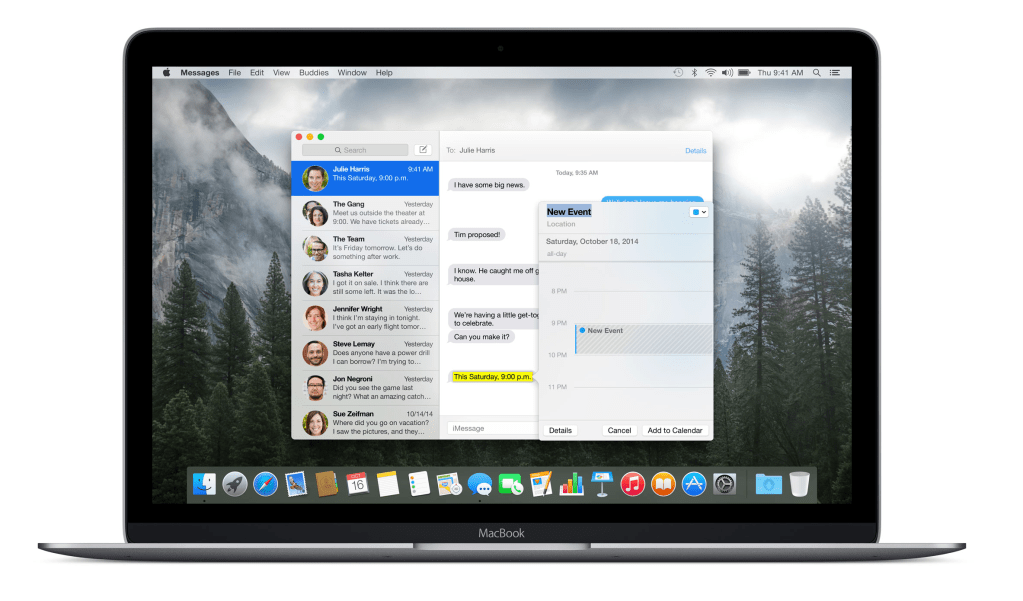
Apple has an opportunity to build something that’s smaller and lighter than the M1 Air while hitting a lower price point. The entry-level iPad sells for $449 in its 256 GB configuration with an 11” screen. Apple could reasonably leverage an 11” or 12” screen, add a keyboard, increase the battery size a bit, pop in the A18 Pro for another $200, and still return solid margins. Anodize the aluminum in fun colors like it does for the iPad, perhaps. The result might be reminiscent of an iPad with a keyboard permanently attached.
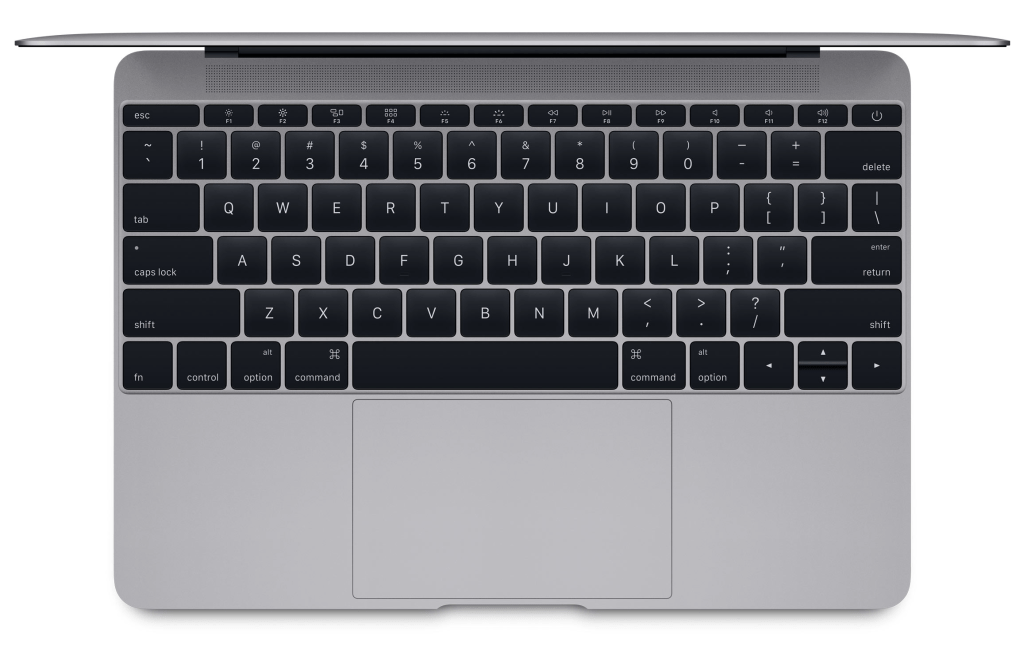
Typically miniaturization is more expensive and is not a great target for a low cost machine, but the A18 Pro needs less space, cooling, and power than the already-efficient M-series, allowing Apple to literally remove battery capacity to make a smaller device. While this would be a new form factor, it’s one that I’d expect to be in use for many years, providing Apple a return on its design investment.
Product Positioning
A low-cost MacBook will cause some cannibalization of the MacBook Air just as the base iPad, iPhone SE / 16e, Apple Watch SE, and Mac mini do in their respective lines. Like those products, Apple will limit features to encourage customers to upgrade to higher-end products. The low-cost MacBook will bring in consumers who would never think of purchasing a $1,000 laptop. Some will spend $700 and call it a day; others will end up spending $1,000 on a different product once they start configuring.
Much like the M1 Air on sale at Walmart, I expect the low-cost MacBook to maintain a single configuration with 256 GB storage and 8 GB RAM. If customers want more memory or storage they’ll need to buy an Air. The Air will continue to have a bigger, brighter, better screen, higher performance, better connectivity, and better sound. The low-cost MacBook will be targeted at basic browsing, video watching, and social media. The Air will be targeted at general computing, basic gaming, and light media production.
Do I Want One?
Yes. Assuming Apple releases it with a new design that’s smaller, thinner, and lighter than the MacBook Air, I would be interested. Not as my daily driver, but as a focused machine for browsing, media consumption, and writing. I have a 2018 iPad Pro and I’ve got the keyboard case an a Magic Keyboard for it, but I just prefer a laptop configuration for writing. I can, and do, use my 2015 MacBook for this purpose, but the occasional internet browsing I need to do while writing is less than great on that machine.
A low-cost MacBook would provide reasonable browsing speed and offer some focus. The M4 Mac mini occupies a similar purpose in my life – I use it to solely to backup my RAIDs to the cloud so I don’t have to chain my MacBook Pro to my desk for hours.
What’s Next?
A low-cost A-series powered MacBook has been rumored for several years, picking up significant steam in 2025. Reputable supply chain and Apple rumor breakers Ming-Chi Kuo and Mark Gurman have said that production has already started and expect a release in the first half of 2026. Maybe we’ll see it during the Spring iPad event 🙂
 Relatively Ambitious
One Reply to “”