
Back in the nineties, before USB was the common way to connect everything from keyboards to RAIDs to junk from Temu, SCSI was the king of fast storage connections. Macs had a form of SCSI since the 1986 Mac Plus and an entire ecosystem of hard drives, scanners, and removable storage drives were built around it. The Iomega Zip was one such device, offering 100 MB storage on floppy disk-like media. External zip drives were naturally offered with SCSI connections for Macs and internal drives were available in both SCSI and IDE for PCs.
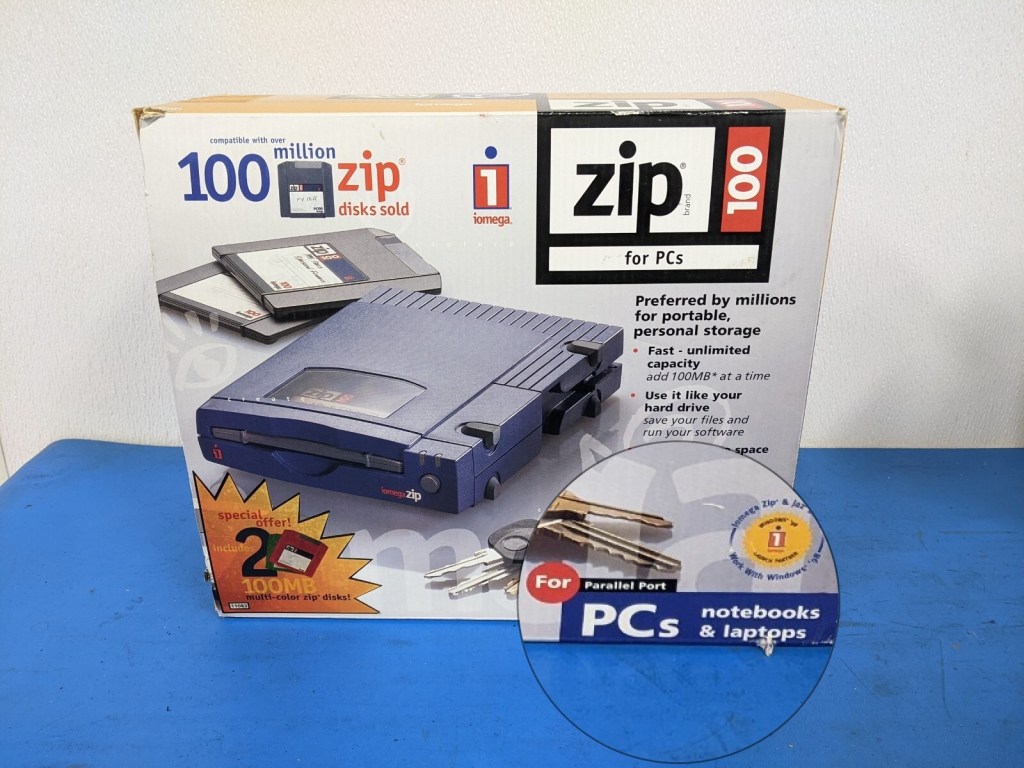
Iomega also supported connections through the parallel port1, but at about ⅓ the transfer speed2. While this provided a connection for basically any PC, Iomega recommended that users install a dedicated SCSI expansion card to increase performance.
This solution provided a choice between speed and convenience for desktop machines, but what about laptops? The Mac had this solved with the compact HDI-30 SCSI port featured in every PowerBook, but most PCs didn’t include any form of SCSI. Parallel was often absent as well due to space constraints. What would a PC laptop user do? This is where our adventure begins.
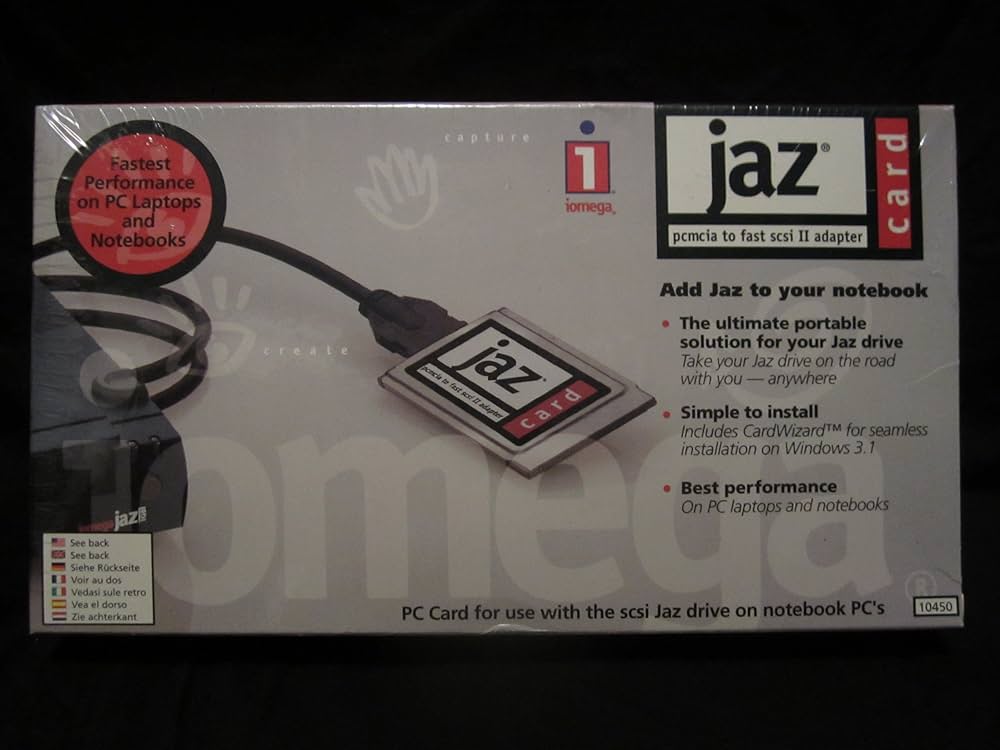
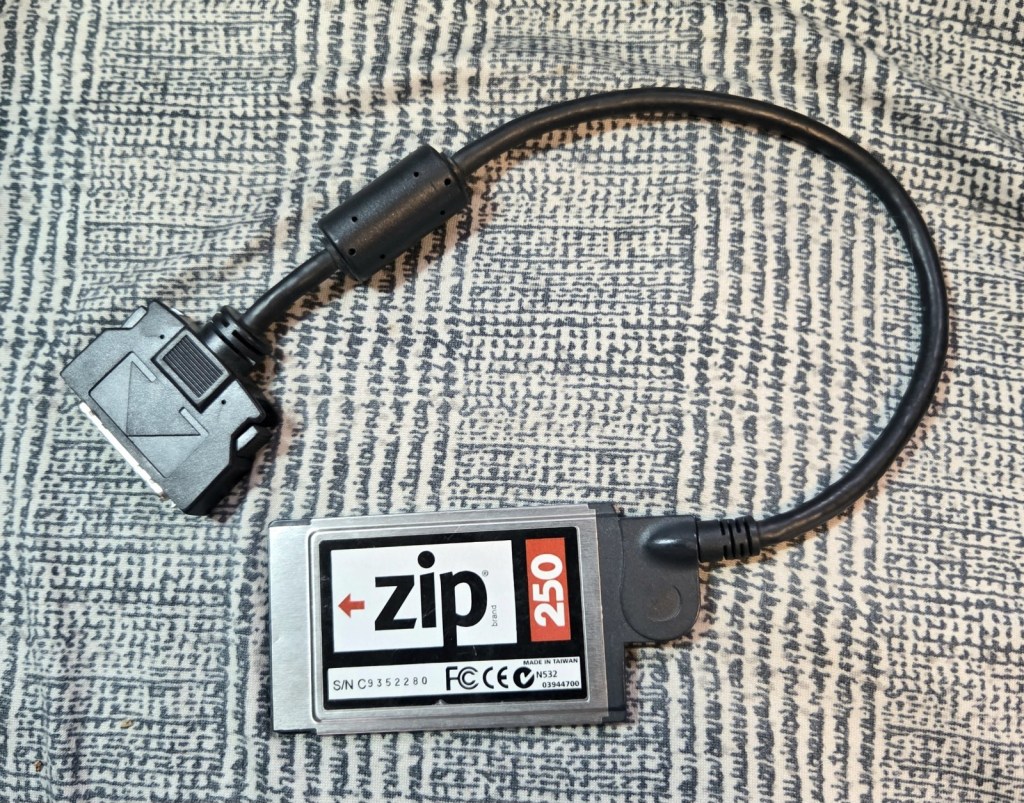
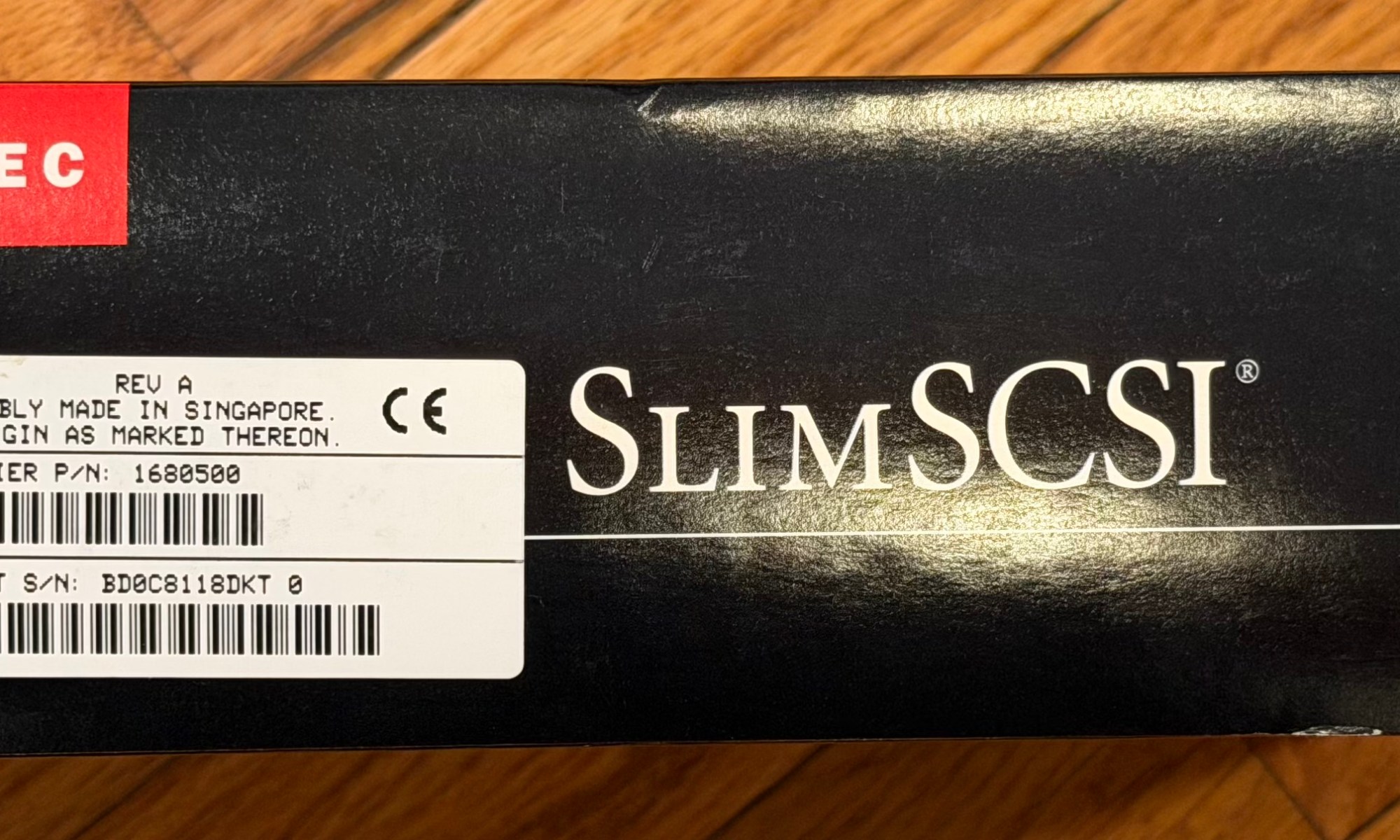
Randomly browsing eBay one day as I tend to do, I came across an Iomega Zip branded SCSI PC card. The card promised increased transfer speeds by adding SCSI to your Windows 95 laptop. It turns out that there were several versions of this Zip PC card as well as some SCSI-2 versions branded for Jaz drives. During my search I also came across a more universally positioned series of cards by Adaptec: the SlimSCSI 1450, 1460, and 1480. They too promised Windows 3.1, 95, and 98 compatibility and provided SCSI speeds for external scanners, CD ROM drives, and yes, Zip and Jaz drives.
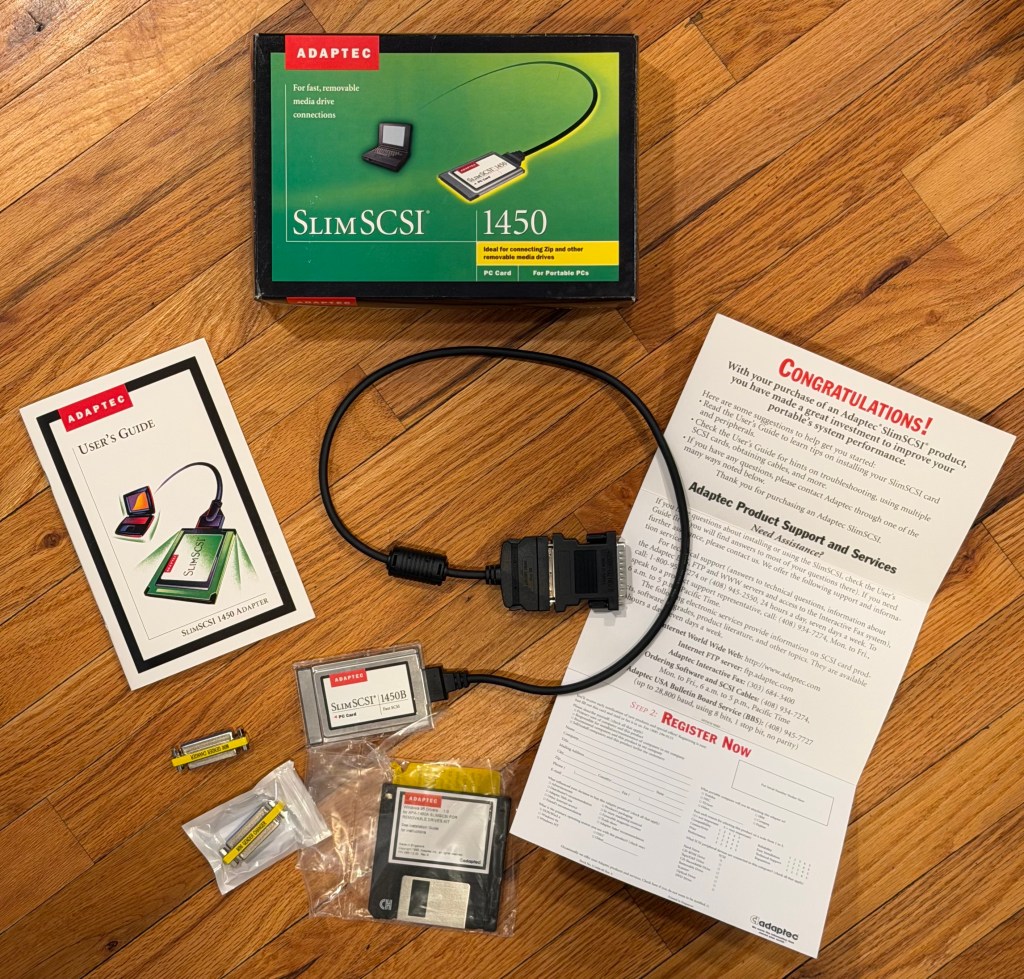
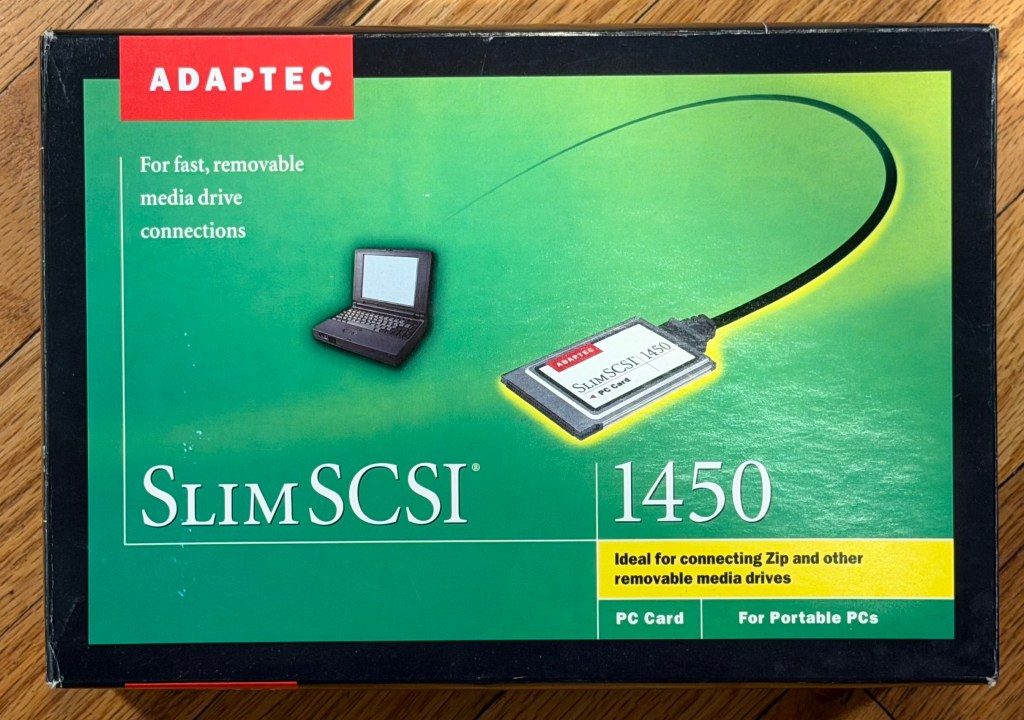
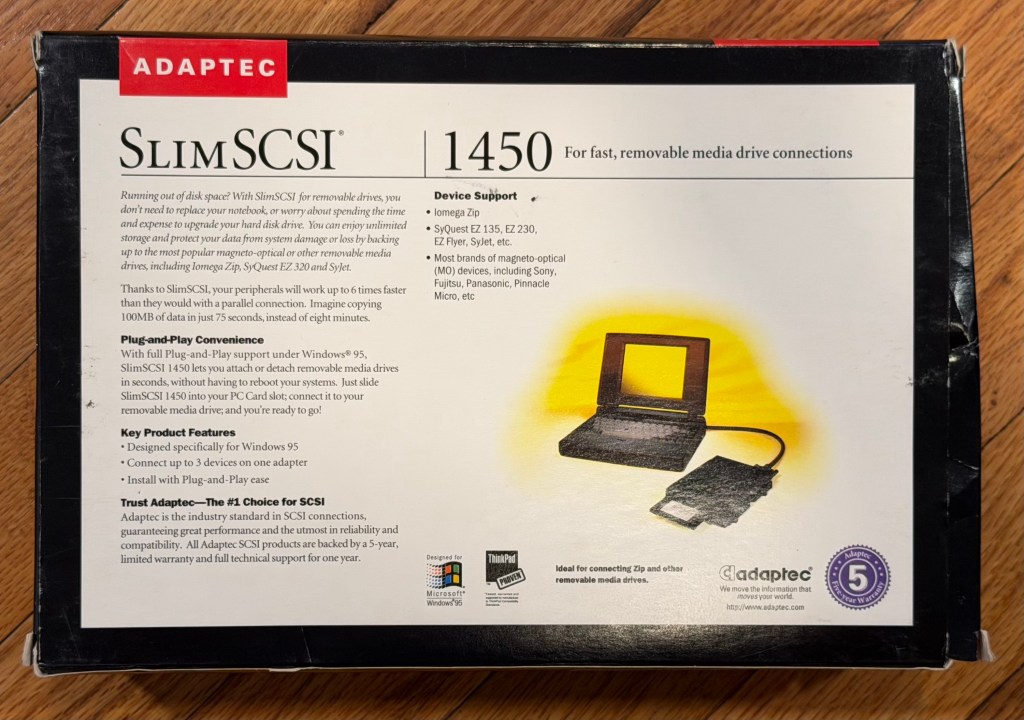

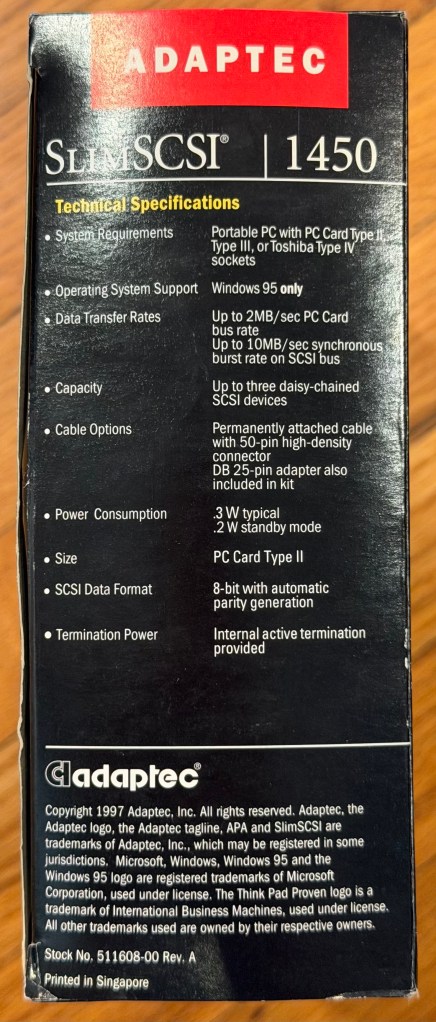
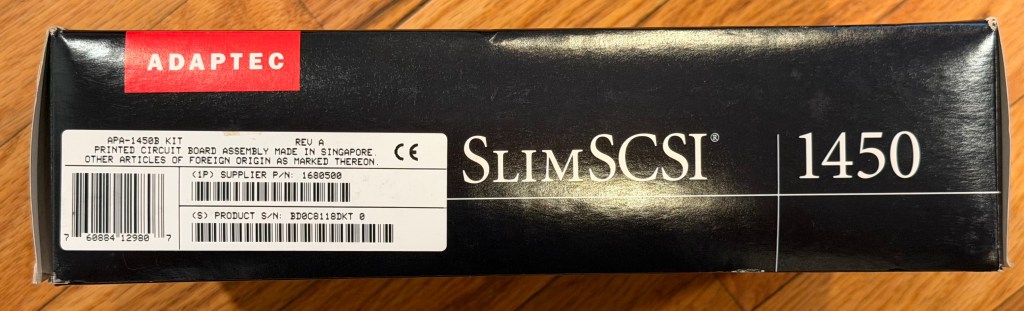
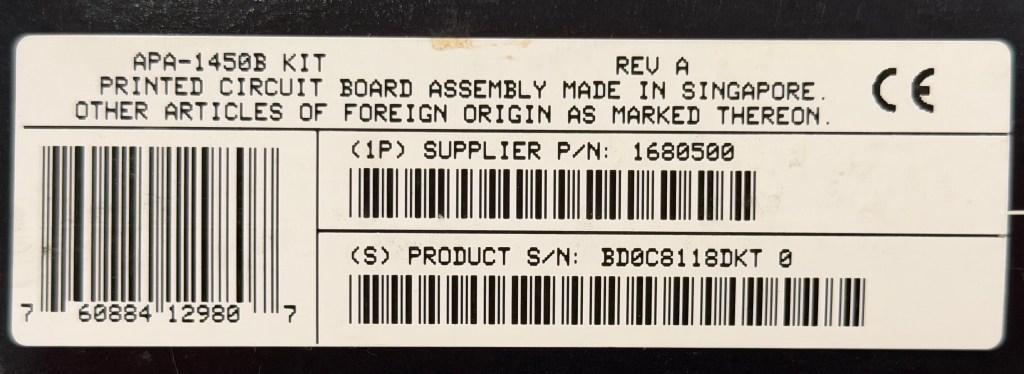
I watched a variety of cards from Iomega and Adaptec, struggling over which to get. I theorize that they all use similar or the same chipsets underneath, but I couldn’t find any verified documentation or comparisons. While I assumed the Iomega-branded card would work with non-Zip or Jaz drives, I decided to go with the more generic Adaptec card instead. I purchased the Adaptec SlimSCSI 1450B due to its clearly documented compatibility with Zip drives, Jaz drives, MO drives, and Windows 95. I found an open box version that still included all of the original documentation, accessories, and drivers.
The whole thing is a pretty simple setup: insert the PC card into the laptop and plug its attached cable into your SCSI device. The cable has a 50 pin high-density connector on it, but the box includes an adapter to convert it to a male DB-25 plug. It was at that point I ran into my first issue: I needed a female plug in order to connect my zip drive. A quick trip to Amazon and a couple days later yielded a “mini gender converter”, which converted it from male to female.
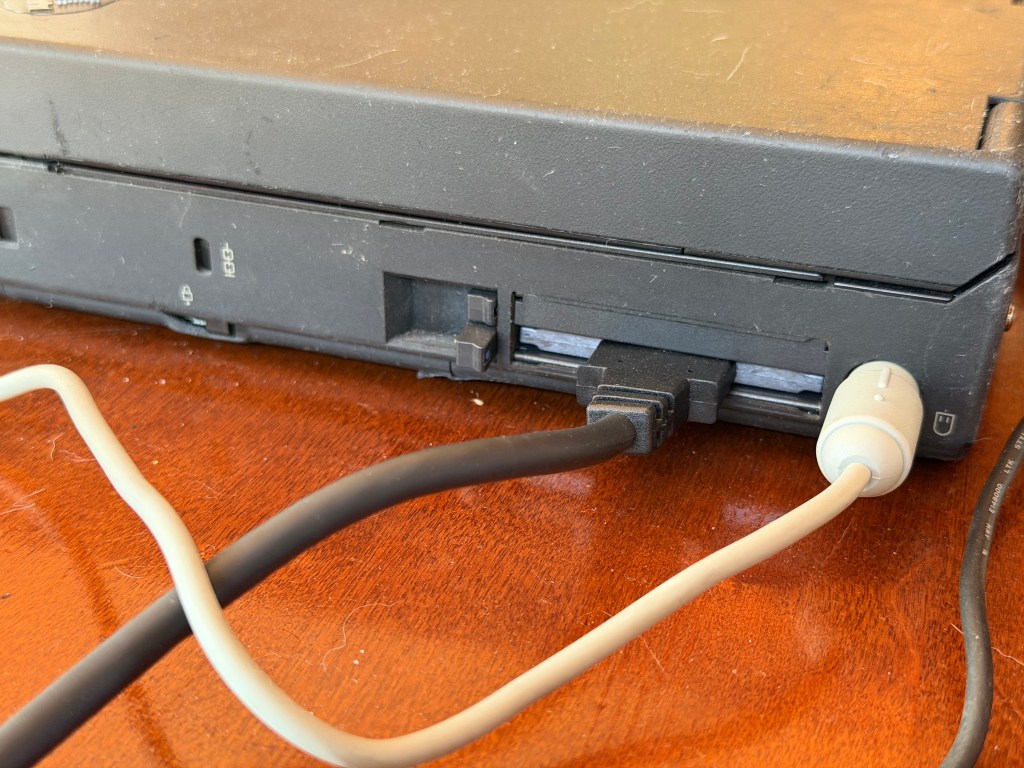
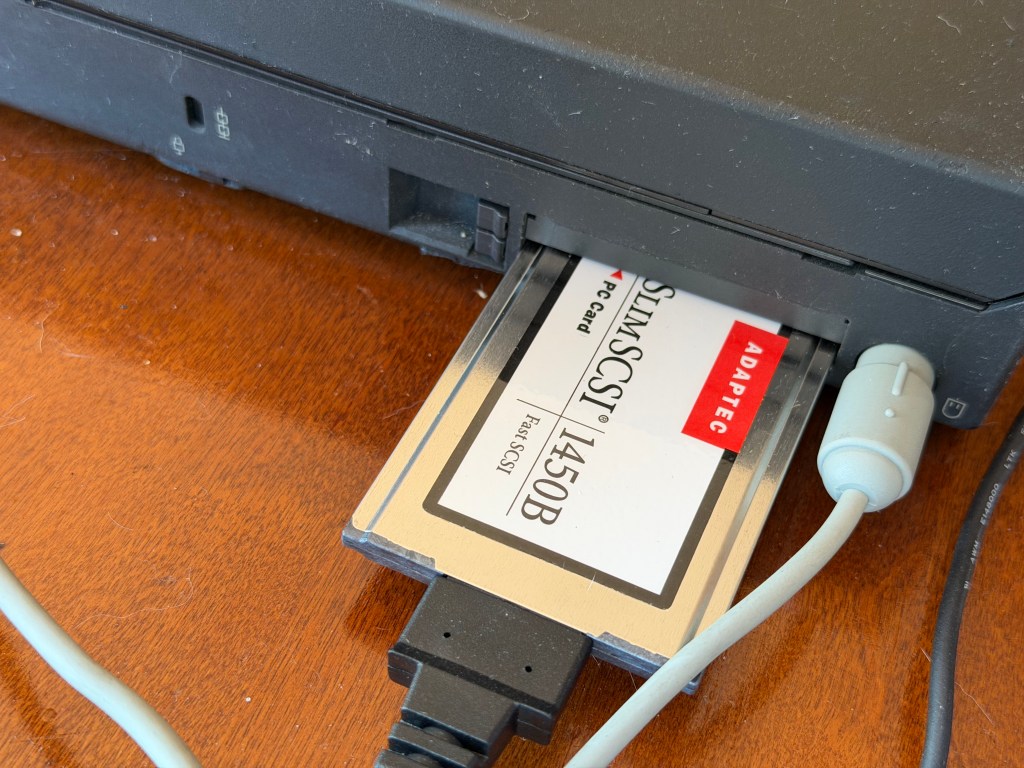
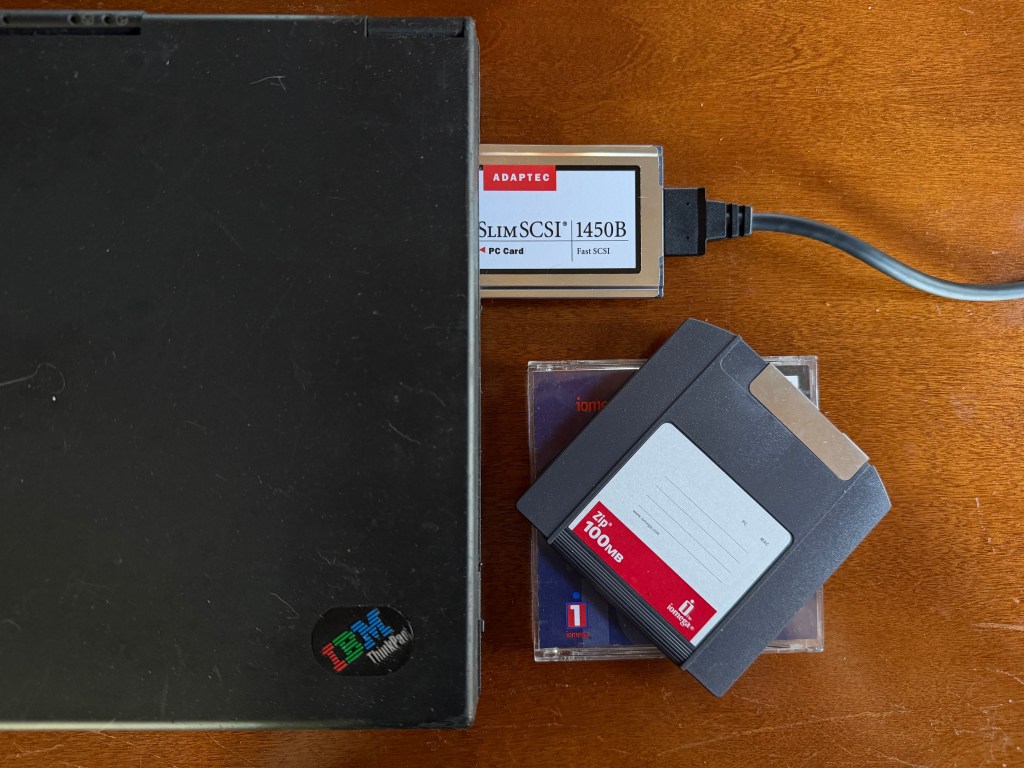
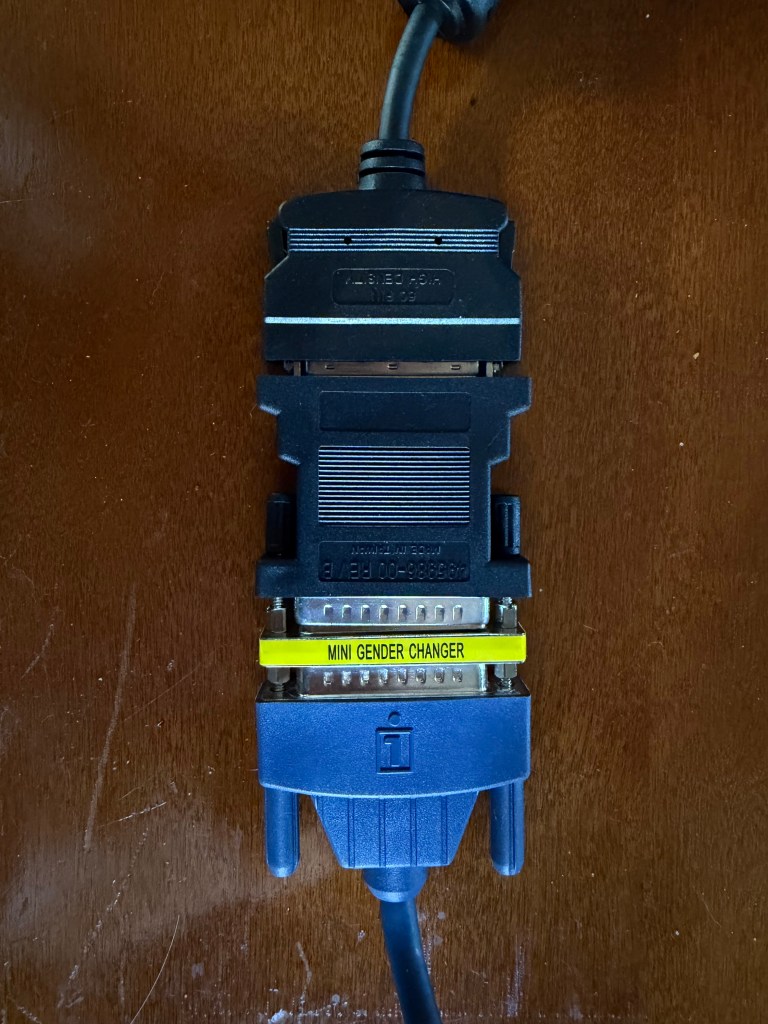
I plugged the 50 pin connector into the DB-25 adapter, plugged that into the mini gender converter, and plugged that into one of my SCSI zip drives. The drive turned on, Windows 95 detected it, and it even showed up as a removable disk in My Computer. Unfortunately the drive wouldn’t allow a disk to be inserted all the way in order to read it. Turns out the drive mechanism was broken.
A quick unboxing of another zip drive confirmed that the adapter and its Frankenstein of connections did indeed work. It was recognized immediately by Windows with no additional software installed. I successfully formatted a Zip disk and transferred files to and from without issue. I later installed the included drivers due to their promise of increased transfer performance.
I’m incredibly impressed that it worked so seamlessly once I had all of the adapters I needed. While I didn’t test a Jaz or MO drive, I’m confident they will work as well. I’m still curious if the Iomega branded versions work with non-Iomega products so I might pick one up at some point to compare. These cards are pretty niche, but I wasn’t aware of them and they provide a high capacity data transfer option for some of my old PCs that don’t have CD-ROM drives. This was a great discovery.
- Which coincidentally uses the same DB-25 connector as SCSI ↩︎
- According to testing published on Low End Mac ↩︎
 Relatively Ambitious