
Out of the Hobby
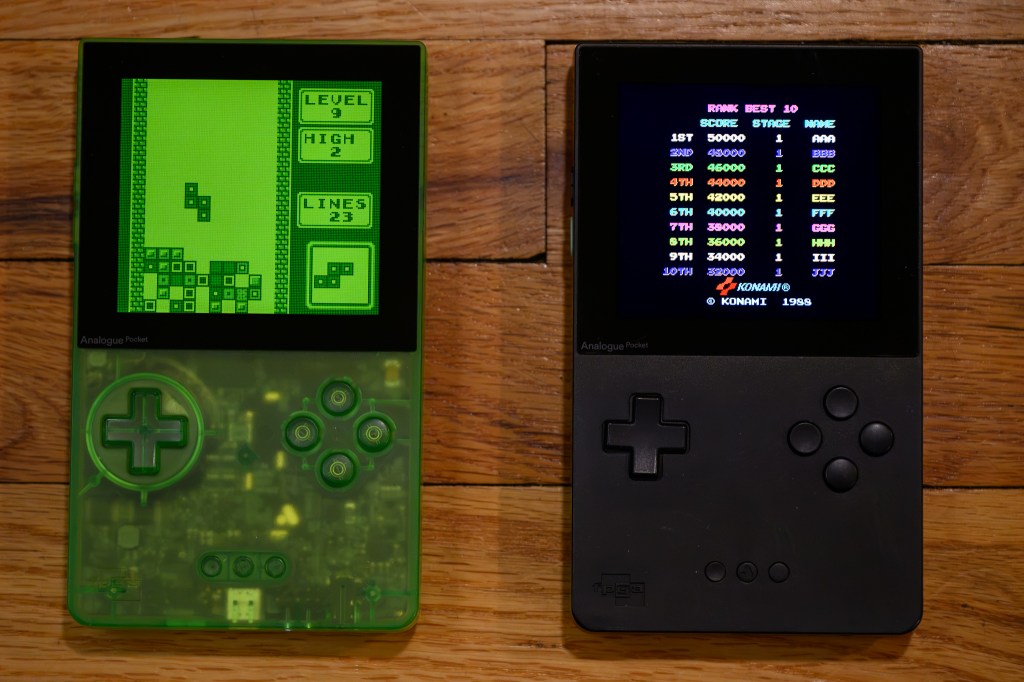
Most of 2023 was quiet save for an impulse purchase of yet another Analogue Pocket, this time in transparent green. I could not resist even though I wasn’t using any of my handhelds regularly at that point. (I have a bit of a “buy it now, use it later” mindset; just ask me about books.) This release of transparent colors was a limited run, which is something that Analogue continues to do on occasion (see here, here, here, and here). As much as I’d love to collect them all, it’s a bit of an expensive proposition at $200 a pop. Anyway, I received mine in October 2023 and it became my primary Pocket when I wanted to use it, which was still rarely.
Things were quiet in 2024 – I didn’t purchase any new handhelds and didn’t even spend any time exploring my library. Speaking of my library, it was a mess of different games installed across different devices with no consistent naming, box art, or configuration, and no way to sync progress between. I had barely touched the Mario games I wanted to play, let alone complete, and hadn’t branched out into any games I wasn’t already familiar with.
Fast forward to the end of 2025. I’d brought the Analogue Pocket on numerous trips and almost never took it out of my backpack. Whenever I thought of using it I’d pivot to something else instead. I always had something to read on my phone or write/edit on my laptop that was more interesting than picking up a game, remembering where I was at, and continuing through. Up to that point I really enjoyed configuring my devices just not actually playing them.
But that was about to change.
Back Into It
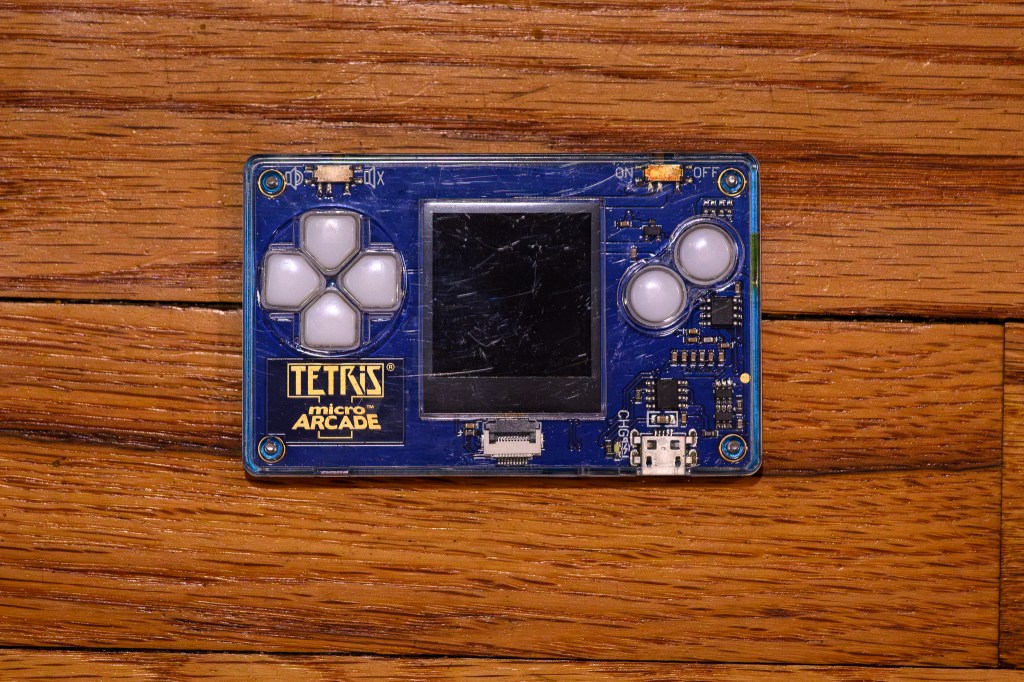
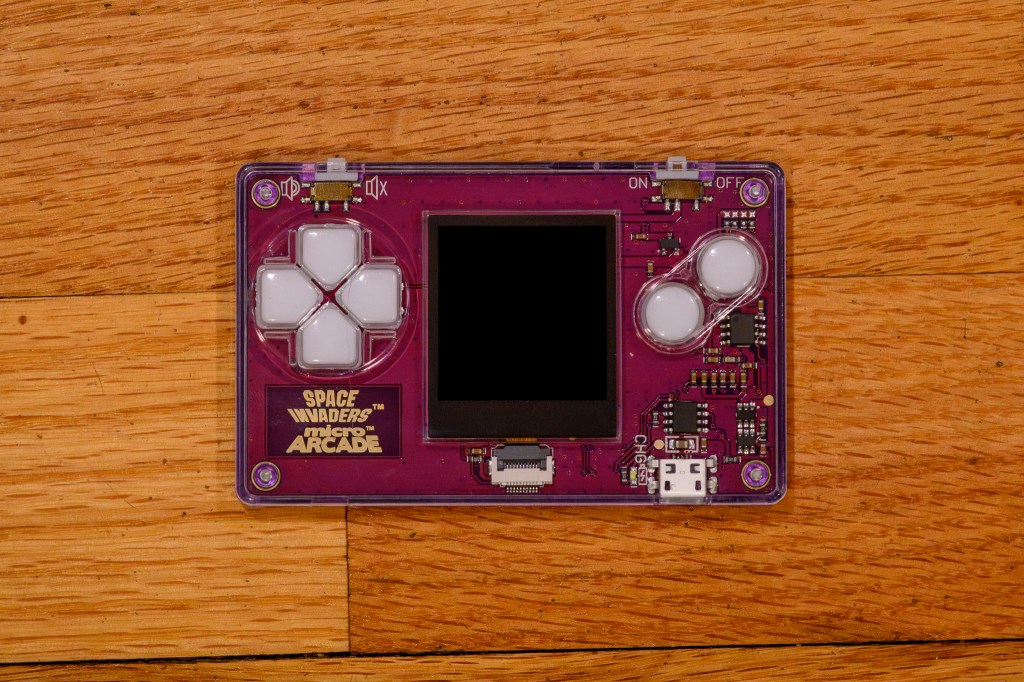
I’ve always been a fidget person. I love buttons, textures, things that click, and tactility. Since I put away my handhelds I had amassed a collection of mechanical keyboards and become fluent in various switch types and keycap styles. I even bought individual switches and caps as fidgets for onsite meetings at work. At various times I had an SLR, mechanical key switch tester, and various micro Arcades on my desk to fidget with during the day. I’d pick them up during meetings and press the buttons over and over to feel and hear the satisfying click or push. I often referred to the SLRs as my “emotional support cameras”.
Around the fall I pulled out my trusty RG351P just to push the buttons. It’s such a great device with such good buttons – tactile, soft but not mushy, with plenty of travel, and quiet enough not to distract others in the room. It’s incredibly satisfying. Soon the SLRs and mechanical key switches went away and the 351P became my fidget.
Fidgeting became fiddling, which turned into using. The 351P reignited my interest in the hobby and I reconnected to the ecosystem. I started listening to retro gaming podcasts1 and visiting Retro Dodo again to see what had changed in the space since I’d taken a break.
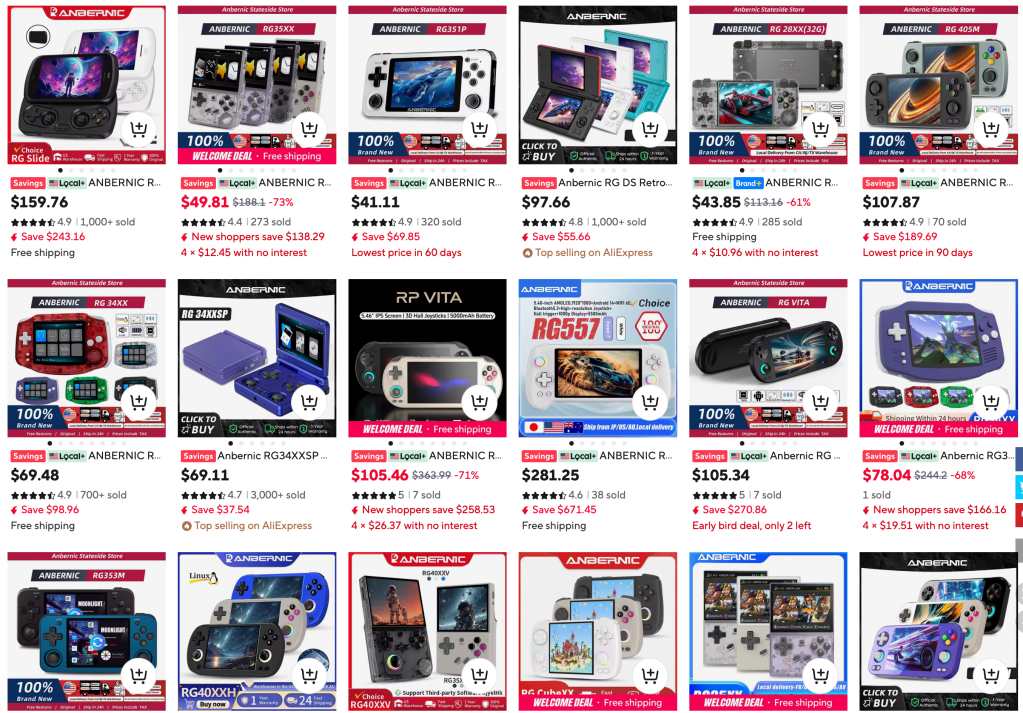
It turns out that a lot had changed in the handheld ecosystem. Anbernic expanded its lineup into a huge variety of form factors, screen sizes, and niche designs. Some iterated on the 351P with larger screens and refined button layouts while others catered to gaming from specific systems, designed to look and feel like the Game Boy Advance, Game Boy SP, and Sega products.
The hardware became vastly more powerful across the board. Suddenly emulating the entire library of PS1, PS2, and N64 games was achievable on handhelds costing less than $200. Nintendo DS, Game Cube, and Wii with 2x or 3x upscaling was standard. At the high end, difficult Dreamcast, Wii, and PS2 games were playable and the Switch was being emulated on the regular.
Android, which was just beginning to mature when I stowed my devices away, was becoming a dominant platform on handhelds. It was increasingly the only platform for $200+ devices and had matured significantly. Frontends like Emulation Station Desktop Edition made it easy to organize and access an entire library of games across systems, Syncthing synced save states across devices, and Obtainum made it easy to download and update emulators and utilities. In addition to classic games, Android enabled native games from the Play Store, PC game streaming, and even PC game emulation.
Companies like AYN put flagship Android chips in their devices with prices to match. These flagship handhelds matched flagship phones with 8, 12, or even 16 GB RAM, up to 1 TB storage, and 8” OLED screens running at 120Hz. Custom graphics drivers squeezed out performance, allowing Switch and emulated PC games to run smoothly. Prices ranged from $300 – $600, entering Steam Deck territory (another development that occurred during my off-season).
The low end of the market was flooded as well with sub-$100 devices from Anbernic, MagicX, Miyoo, TrimUI, AYANEO, and others. A mixture of Linux and Android-based options were available with good LCD displays, solid controls, and the ability to play console systems through N64, PS1, and Dreamcast. They came in all shapes and sizes too: pocketable 2.8” devices up through 4” devices in vertical, horizontal, and clamshell form factors.
Starting Small
After using my 351P as a fidget, I started actually playing it again. I replaced the custom 351Elec firmware I had installed in 2020 with AmberElec, its more modern successor. I favorited some of the games I wanted to play (mostly Mario) and scraped the box art, manuals, and video previews for the entire ROM library on my SD card. I started following tutorials from Retro Gaming Corps again, subscribed to its YouTube feed, and relied on Russ’s incredibly detailed reviews to catch up on what I’d missed. I learned about everything that had changed and got the itch for a new device again.
The first thing on my list was something small that I could throw in my backpack. Not that the 351P isn’t small, but I wanted something even smaller. After watching Russ’s Favorite Tiny Handhelds video, I settled on a MagicX Mini M, a linux-based handheld with a 2.8” screen. Though released in 2024, it contains the same chip and memory as my 351P from 2020. It even lacks WiFI and can run the same custom firmware! But it’s small, includes high-quality hall-effect joysticks that won’t drift, and only cost $50 shipped.
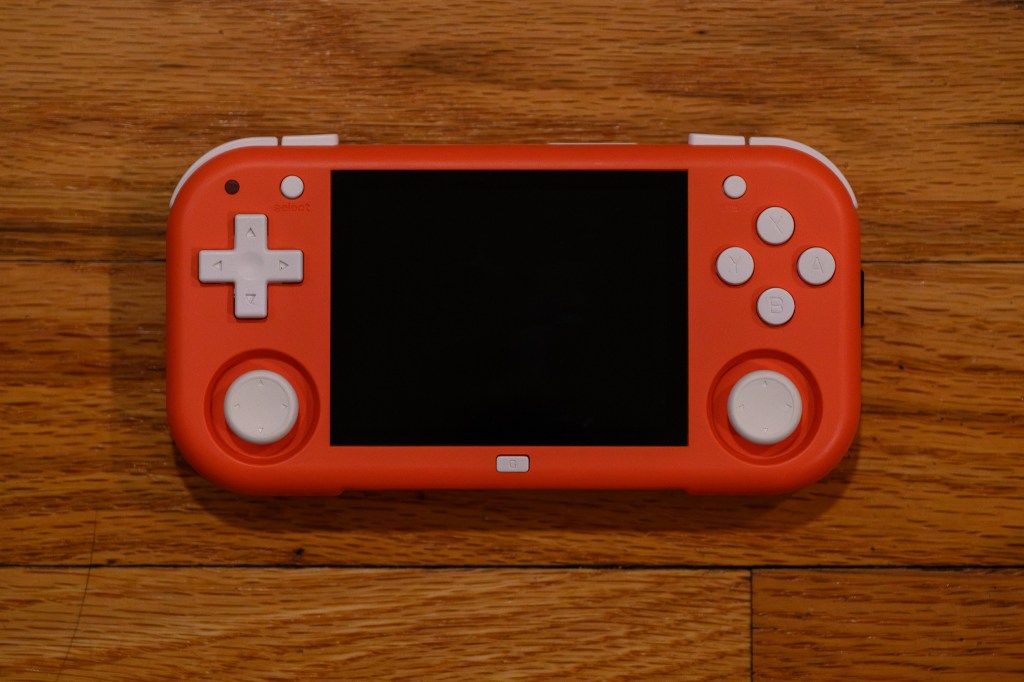
Mine has an orange shell that feels a bit cheap and the SD card died the first time I tried to copy my ROMs over to it, but with a fresh install of ROCKNIX on my own SD card it’s been great. The screen is small, but nicely detailed with its 640 x 480 resolution with great contrast, brightness, and saturation. It’s not OLED, but I prefer it over most of my other handheld screens. ROCKNIX is a solid OS, providing a great navigation interface, plenty of customization, and WiFi support when a USB dongle is plugged in. The controls are bit less responsive and comfortable than those on my 351P, but I can still enjoy gaming sessions on the go with the small form factor. The hall-effect joysticks are rare at this price and an upgrade over my other handhelds
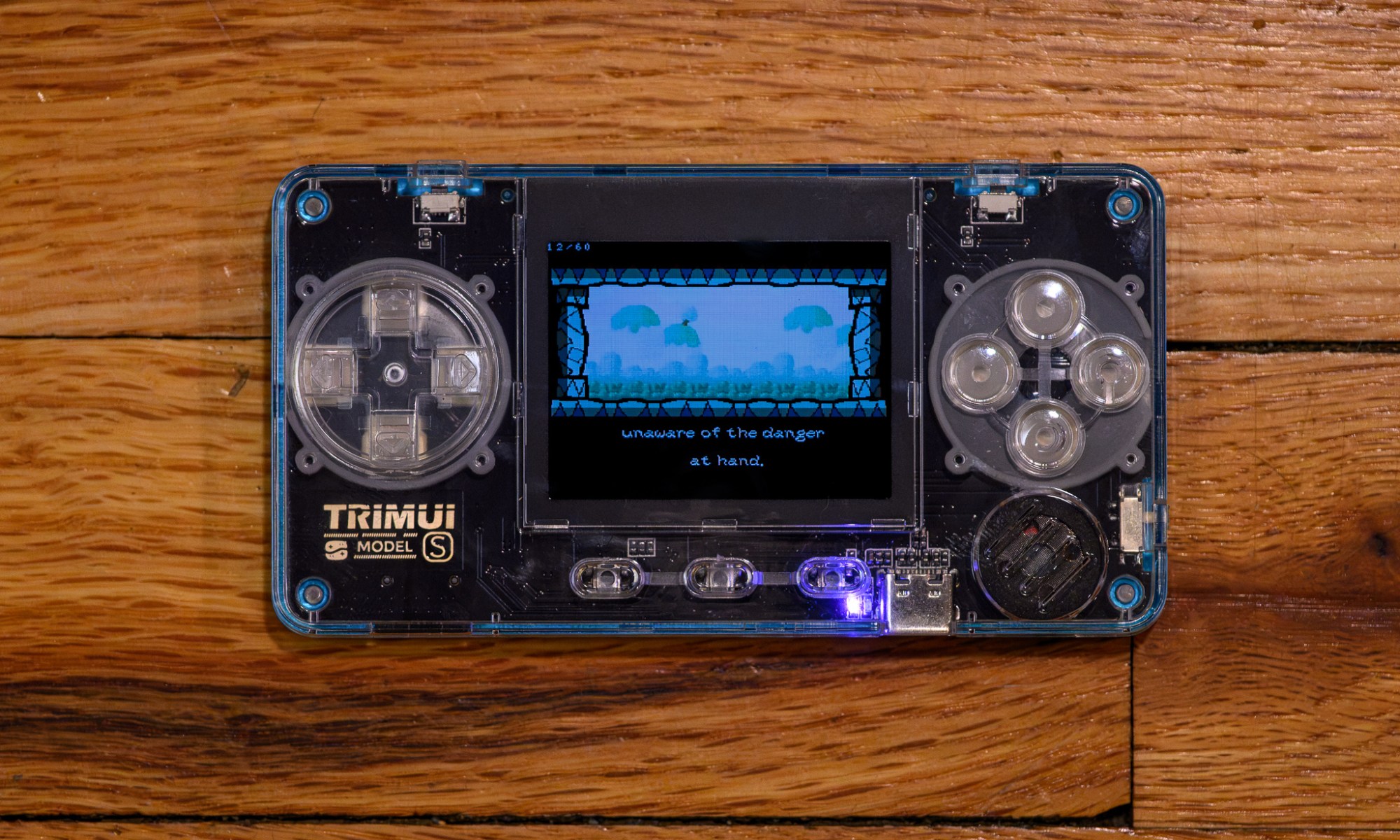
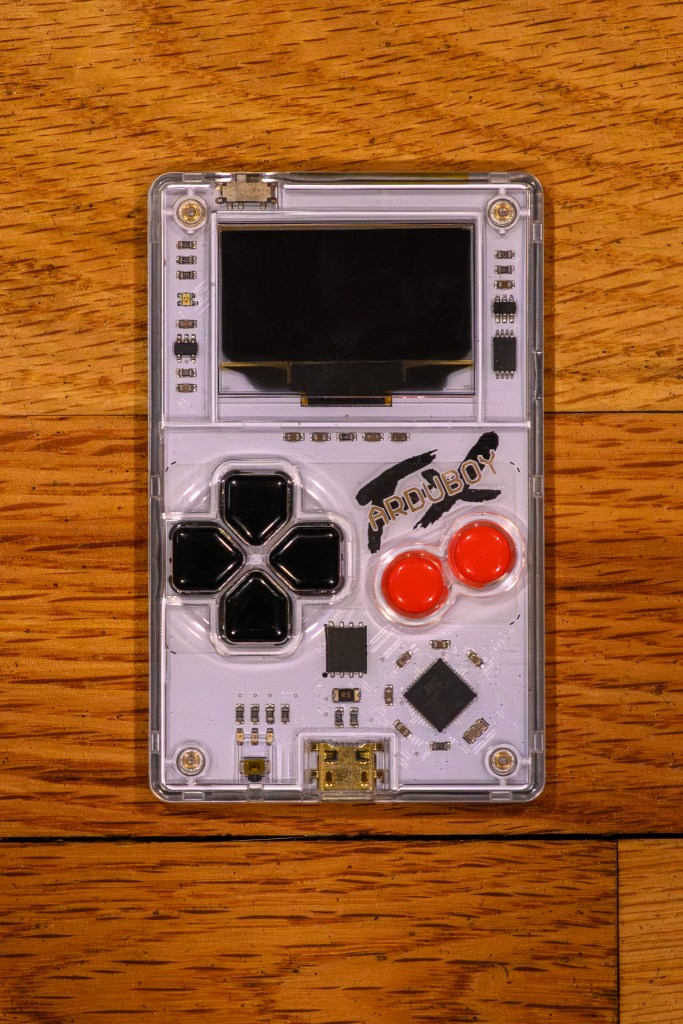
In addition to the Mini M I bought something even smaller, akin to my PowKiddy V90 in processing power, but almost the size of a credit card. I own a few Micro Arcades and Arduboys and I really like them because they’re so small. I just find it amazing that we can cram controls, a screen, and a real game into that small space. I always wished that the Micro Arcades played more than a single game and I was thrilled when I found a device that could: the TrimUI Model S.
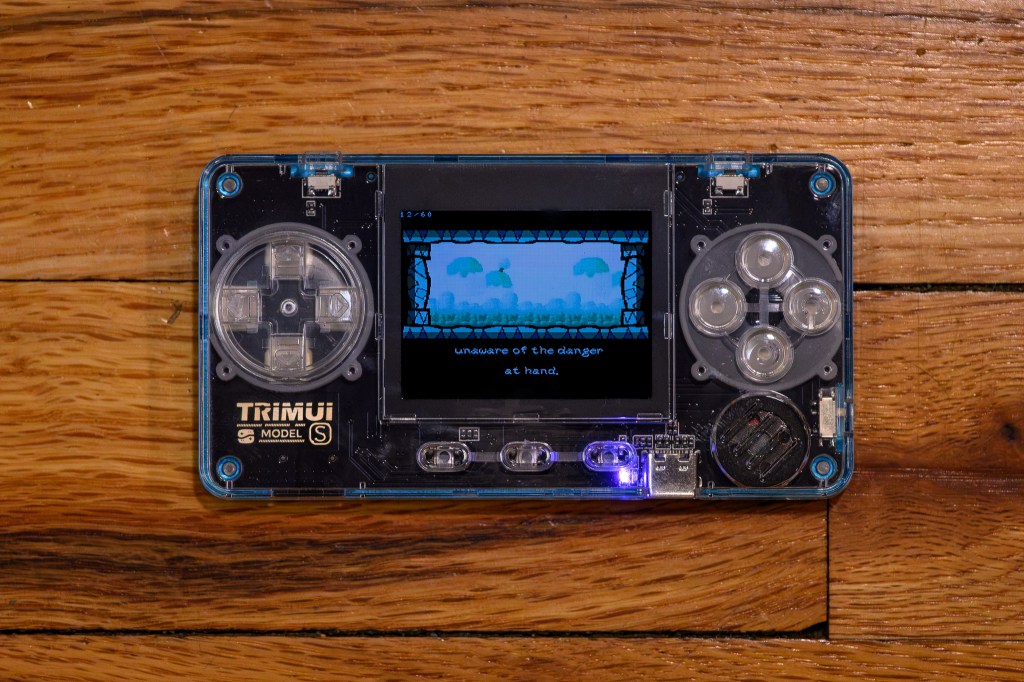
The Model S has been on sale since 2020, but I discovered it last year. It’s only a little larger than a Micro Arcade but can emulate 8 and 16-bit games up through Super NES. It’s about the same footprint as a credit card and as thick as my iPhone 17 Pro. The screen is absolutely tiny at 2” and packs a 320×240 resolution at a 4:3 ratio. It’s similar to the V90 in that it is very low powered, has no GPU, and has limited RAM (though double the V90’s at 64 GB). The software on it isn’t great, but open source custom firmware makes it better. It’s easy to load games onto an SD card and get moving, so its a nice compact system to carry around.
A Tale of Two Minis
As much as I love my Mini M, its release is mired in a bit of drama. The original announcement specified a more capable CPU but supplier problems resulted in the shipping handheld being less capable than promised. MagicX addressed this with the Mini Zero 28, which uses the same case design, control layout, screen, and ports, but includes a more powerful SOC, includes WiFi, and runs Android instead of Linux.
I picked up the Zero 28 for $68 directly from MagicX and chose the transparent purple version. The design and control layout are the same as the Mini M but the D-pad and face buttons are firmer, the shoulder buttons are quieter, and the entire case is more solid. The transparent purple is clear enough to see the internals but diffused enough that they don’t distract. It has a matte sheen and a bit of fine texture to it that makes it comfortable to hold.
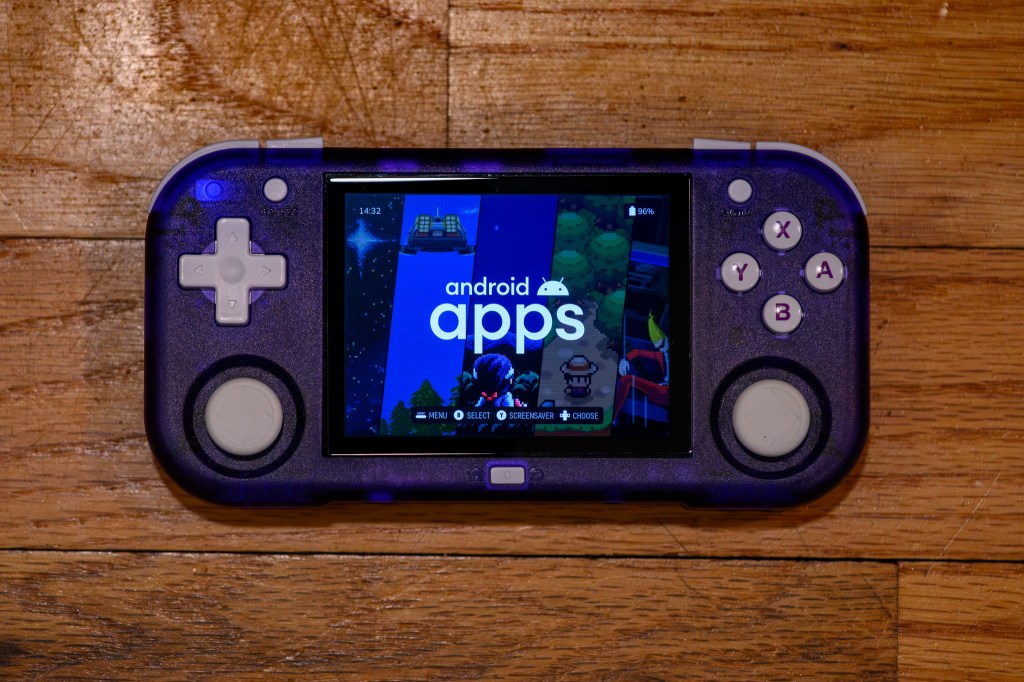
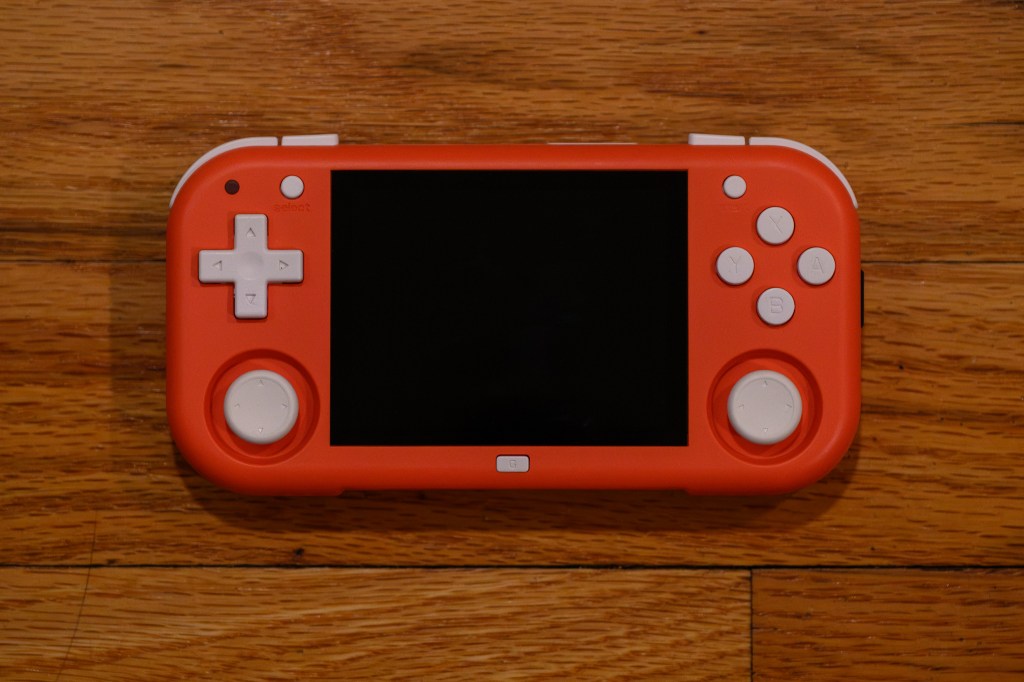
It’s a great little package except for one oddity – it doesn’t have a touch screen. This is an Android device that doesn’t have a touch screen. The stock Android build is not very good and requires the use of virtual mouse mode to configure certain settings and navigate Android applications. Luckily there’s a community firmware called GammaOS Core that’s more button-optimized. It’s based on Android TV and includes button-based navigation in all applications, brightness shortcuts, and a better mouse mode when needed.
Performance doesn’t seem any better than the Mini M despite having twice the memory, but I haven’t pushed it too far. After some drama finding an Android emulator that could play DS games reasonably well, I’ve settled on this one as my small handheld due to its stronger shell and inclusion of WiFi over its sibling.
Craving that 351P Experience
Despite my growing collection of handhelds, I still had a soft spot for the 351P I bought back in 2020. The form factor was comfortable, the size was reasonable, the controls felt great, and it played the majority of the games I wanted to play. It wasn’t perfect, with an odd screen ratio that was a perfect fit for GameBoy Advance but nothing else, comparatively low resolution, and a lack of WiFi unless a silly USB C-to-A dongle with a WiFi adapter was plugged in. In the intervening years Anbernic had increased screen resolution and refined its controls while keeping the same basic form factor, culminating in 2024’s RG-35XX H. It was part of their low-cost “XX” series that came in different screen sizes and form factors but shared the same CPU, GPU, memory, and wireless hardware. It was essentially the same handheld available in nearly any form factor you could ask for.
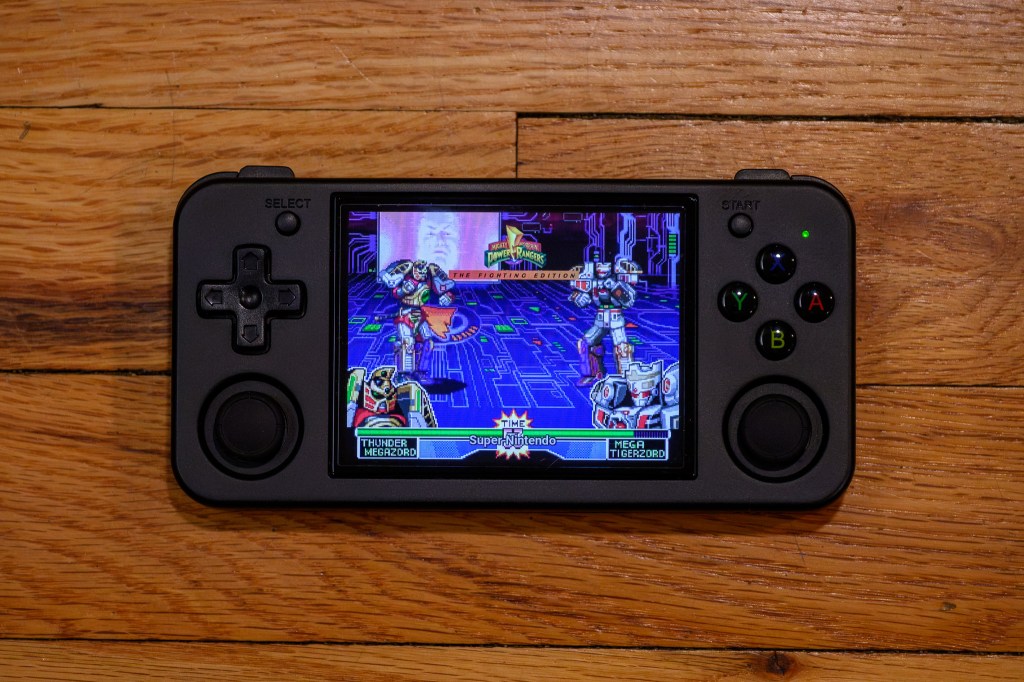
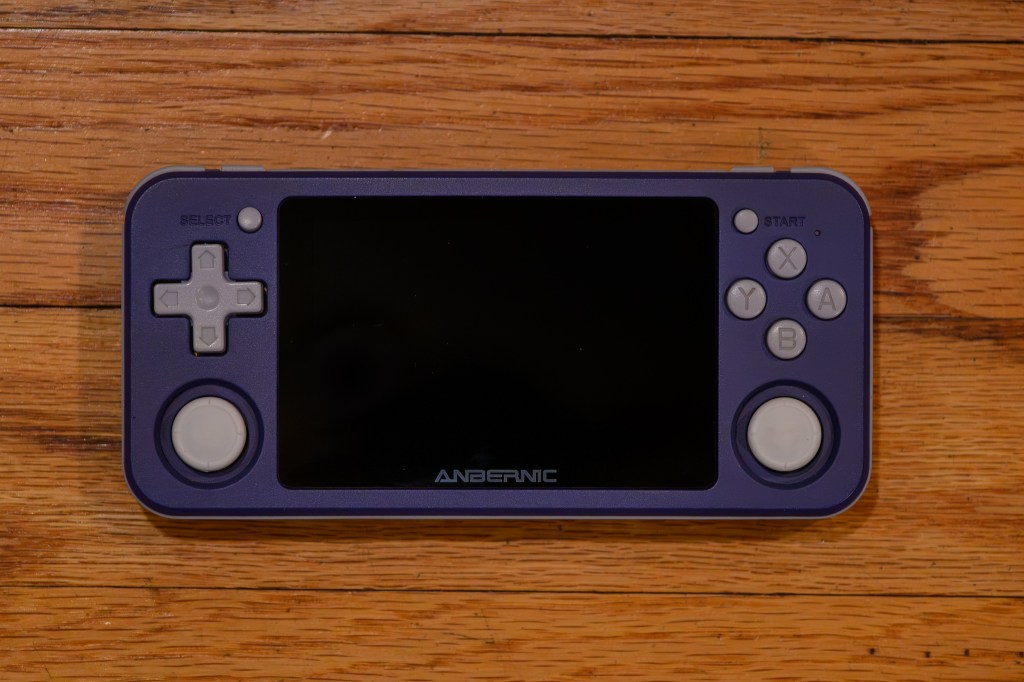
The H or horizontal version, is very similar to the 351P in layout but includes a higher resolution 4:3 screen that better fits most games, improved shoulder buttons, video out, and built in WiFi and Bluetooth. While it uses a different processor (the AllWinner H700) it has the same GPU and memory as the 351P. It runs Linux and I promptly replaced Anbernic’s firmware with the same ROCKNIX distribution as my Mini M. Performance is a tiny bit better than the 351P due to the CPU (which makes a bigger difference during emulation) but I don’t really push it. It’s a good handheld, but the AllWinner H700 doesn’t support suspend mode like the Rockchip RK3366 does in the 351P, so it’s not as easy to put it to sleep and pick it up later. The 35XX H is often seen in its clear shell, but I deliberately chose black because I think the white PCB that shows through the clear shell looks tacky.
Finally Metal
Anbernic has a long history of releasing handhelds in metal shells, often pairing them with similar lower priced plastic-shelled options. In the 351P generation they were the 351M, the 351MP, and the 353M. Currently it’s the 477M. In between these generations came the 405M, which is considered by some to be the ultimate evolution of their horizontal form factor. Having only owned plastic handhelds, I became very interested in owning a metal one.
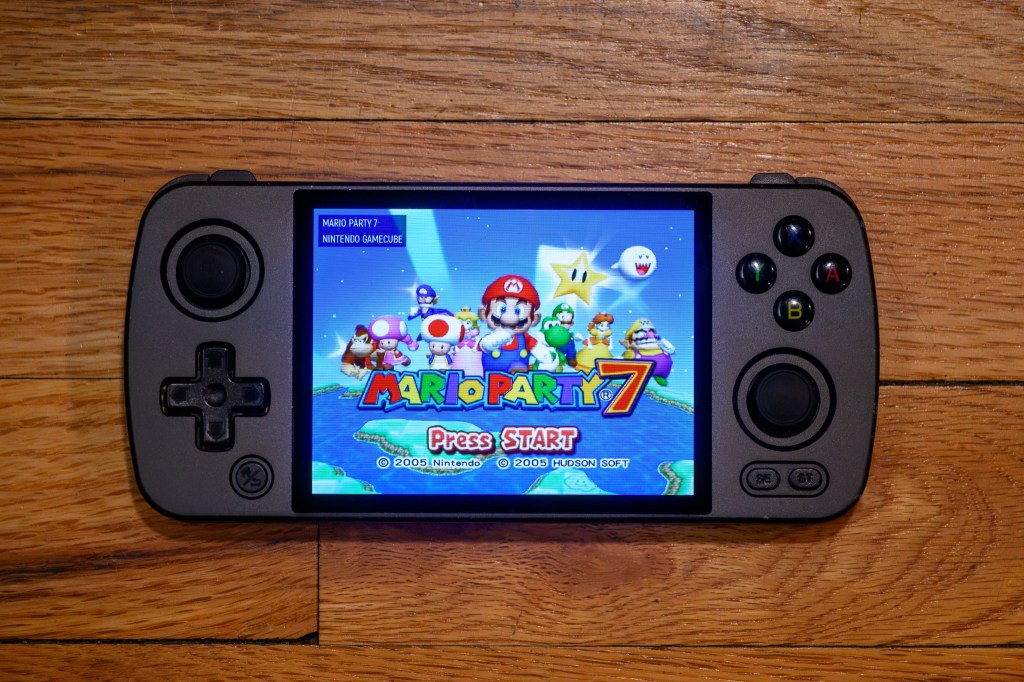
I bought a 405M in March for $125 from eBay. I paid more than I should have compared to other historical auctions and could have bought one brand new for a tiny bit more but I didn’t want to wait 3 weeks for shipping from China. The 405M has the same chip, GPU, and memory as my Retroid Pocket 3+ but includes a smaller and lower resolution 4” 640×480 pixel 4:3 display. While not as “good”, the smaller display results in a handheld that is basically the same size as the 351P and thus easy to pocket.
The sides are rounded, making it easy to hold and the metal gives it a premium heft. I really like the way it feels. It’s a bit heavier than plastic but not tiring to hold and it has just enough extra texture to feel premium. The buttons have great travel and a little extra firmness from the metal case. Pressing them is very satisfying. It has hall effect thumb sticks like my MagicX Minis, but they feel very similar to the non-hall sticks on my other Anbernics; they aren’t as tight as the Minis.
Unlike my other Anbernics, this runs Android, and unlike my Minis, it actually has a touch screen. I’m a pro at configuring Android now, so setup was straightforward. For the mostly 16-bit games I played, it worked great. I still used the Pocket 3+ for Gamecube or Wii games due to the larger screen.
Onto the High End
In 2025 I had added 5 additional handhelds to my collection, representing the low-end of the market. At the same time I’d learned a lot about the high-end flagships and what they could do. The high end is where I’d look next.
- The podcasts (This Week in Retro and The Retro Hour) focused mostly on classic computers like the C64 and Spectrum, which I never played, but were fun to listen to and sometimes overlapped with handheld news. ↩︎
 Relatively Ambitious